














Everything you need to know about Tirzepatide (Mounjaro)

- What is tirzepatide and how it works
- What’s involved in the injection and dosing
- Who may be eligible in the UK
- Clinical evidence: SURMOUNT trial data and what realistic results look like
- When effects may be noticed
- Side effects and safety: What to expect and when to seek help
- Tirzepatide vs semaglutide: What the SURMOUNT-5 head-to-head trial showed
- Retatrutide: The triple agonist in development and its current UK status
- How to access treatment safely in the UK
- What is tirzepatide?
- How does tirzepatide work?
- An intro to Mounjaro
- Who may be eligible in the UK?
- Clinical evidence and realistic results
- When might effects be noticed?
- Side effects and safety
- Is tirzepatide the same as Mounjaro?
- Tirzepatide vs. Semaglutide
- Retatrutide vs. Tirzepatide
- Accessing tirzepatide in the UK
- Final thoughts
What is tirzepatide?
Tirzepatide is the active ingredient in Mounjaro, a long-acting dual GIP and GLP-1 receptor agonist manufactured by Eli Lilly and Company. In the UK, tirzepatide is licensed and sold under the brand name Mounjaro. You may also come across the name Zepbound. This is the same active ingredient but under a different brand name used in the United States for weight management. Zepbound is not available or licensed in the UK.
Mounjaro is licensed in the UK for two indications, weight management in eligible adults, and improving blood sugar control in adults with insufficiently controlled type 2 diabetes. For weight management, it is licensed as an adjunct to a reduced-calorie diet and increased physical activity.
How does tirzepatide work?
Tirzepatide works by activating two hormone receptors simultaneously, the GLP-1 (glucagon-like peptide-1) receptor and the GIP (glucose-dependent insulinotropic polypeptide) receptor. Both are naturally occurring gut hormones released after eating. Activating both pathways at the same time is what distinguishes tirzepatide from semaglutide and other GLP-1-only medicines.
GLP-1 receptor activation: GLP-1 acts on areas of the brain that regulate appetite and food intake. By activating this pathway, tirzepatide reduces the drive to eat, helps you feel full sooner after meals, quietens food cravings, and extends the feeling of satiety between meals. GLP-1 also stimulates insulin release when blood sugar is elevated, suppresses glucagon (a hormone that raises blood sugar), and slows the rate at which the stomach empties into the small intestine.
GIP receptor activation: GIP also contributes to insulin secretion in response to food, and plays a role in energy balance and fat metabolism. The addition of GIP receptor activity is thought to enhance the appetite-suppressing and metabolic effects produced by GLP-1 receptor activation alone, and may contribute to improved insulin sensitivity.
In practice, the combined effect is a sustained reduction in hunger and calorie intake, alongside improvements in blood sugar regulation. When used alongside dietary changes and increased physical activity, this supports meaningful and sustained weight loss in most people who respond to treatment.
What tirzepatide does not do: It does not directly burn or dissolve fat tissue. Weight loss occurs because the medicine supports a calorie deficit over time, not because it acts on stored fat directly.
Good to know
Tirzepatide is the only licensed medicine in the UK that activates both the GIP and GLP-1 receptors simultaneously. This dual mechanism is thought to explain why its average weight loss figures in clinical trials are larger than those seen with GLP-1-only medicines such as semaglutide.
An intro to Mounjaro
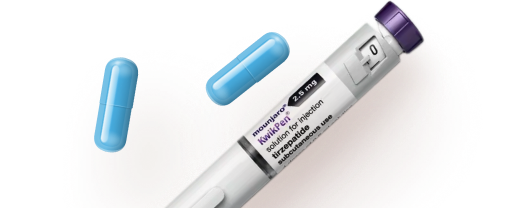
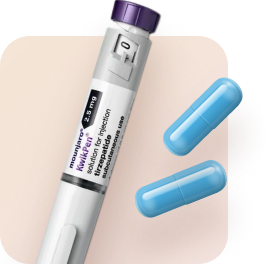
Mounjaro is a once-weekly subcutaneous injection, not a tablet. It is not available as an oral medicine. Each dose is given using a pre-filled single-use KwikPen into the skin of the abdomen, thigh, or upper arm. Injections are given on the same day each week.
Treatment starts at the lowest dose and is increased gradually over several months. This titration approach is designed to allow the body to adjust and to reduce the risk of gastrointestinal side effects. The rate at which doses are increased, and how far escalation goes, is determined by your prescriber based on your individual response and tolerability.
The current dose strengths available in the UK, and the escalation schedule, are set out in the Mounjaro Summary of Product Characteristics and Patient Information Leaflet. Do not adjust your dose without clinical guidance. If you miss a dose, follow the instructions in the PIL supplied with your medication and contact your prescriber if you are unsure.
Important!
Mounjaro is available in the UK as a subcutaneous injection only. There is no licensed tirzepatide tablet for weight management in the UK at the time of writing. If you encounter any product described as a tirzepatide tablet or oral capsule for weight loss in the UK, verify its regulatory status carefully before purchasing. This should be confirmed against current MHRA authorisations before publication.
Who may be eligible in the UK?
The product licence: The MHRA licence for Mounjaro for weight management covers adults with a BMI of 30 kg/m² or above, or a BMI of 27 to 29.9 kg/m² with at least one weight-related comorbidity such as type 2 diabetes, high blood pressure, high cholesterol, obstructive sleep apnoea, or cardiovascular disease. Treatment must be used alongside a reduced-calorie diet and increased physical activity.
NHS access under NICE TA1026: NICE recommended tirzepatide for weight management in December 2024 (Technology Appraisal TA1026). However, NHS access is not the same as the product licence, and the criteria are currently more restrictive. NHS England is managing a phased rollout to balance demand with available capacity, primarily through specialist weight management services and, from April 2026, primary care settings where GP practices have opted in.
The NHS England interim commissioning guidance details eligible patient cohorts, prioritisation strategy, and phased implementation of tirzepatide across specialist weight management services and primary care settings. In practice, NHS eligibility has operated with higher BMI thresholds and additional comorbidity requirements than the product licence, and access varies by Integrated Care Board area. Meeting the eligibility criteria does not guarantee access to treatment, as prescribing depends on local service availability and clinical assessment.
A lower BMI threshold, typically reduced by 2.5 kg/m², applies for people from South Asian, Chinese, other Asian, Middle Eastern, Black African, or African-Caribbean ethnic backgrounds, in line with NHS England guidance.
Private prescribing: Mounjaro is also available via private prescription following a medical assessment by a UK-registered prescriber. Private eligibility criteria may differ from NHS criteria and are determined by the individual prescriber. Meeting the licence criteria does not guarantee a prescription; a full clinical assessment remains essential.
Good to know
The gap between the product licence and NHS access criteria reflects the practical challenges of rolling out a new treatment at scale. If you do not currently qualify for NHS access, private prescribing may be an option worth discussing with a registered prescriber. Criteria and availability are subject to change; check the current position at the time of your assessment.
Clinical evidence and realistic results
The evidence base for tirzepatide's weight management effect comes primarily from the SURMOUNT clinical trial programme.
SURMOUNT-1 is the pivotal weight management trial in adults without type 2 diabetes. It enrolled 2,539 adults with obesity or overweight with at least one weight-related comorbidity, randomised to tirzepatide (5 mg, 10 mg, or 15 mg) or placebo, over 72 weeks. All participants received dietary and lifestyle support. At the maximum dose of 15 mg, participants lost an average of 20.9% of their starting body weight over 72 weeks, compared with 3.1% in the placebo group. Among those who completed the full trial on the 15 mg dose, average weight loss was 22.5%.
In terms of responder rates at 15 mg, over 90% of participants lost at least 5% of their body weight, around 57% lost at least 20%, and approximately one in three lost 25% or more.
SURMOUNT-2 studied tirzepatide in adults with obesity and type 2 diabetes. Average weight loss at the highest dose was around 15% over 72 weeks, reflecting the typically slower weight loss seen in people with type 2 diabetes on GLP-1 class medicines.
SURMOUNT-4 studied what happened to participants after completing initial tirzepatide treatment. Those who switched to placebo regained weight, while those who continued on tirzepatide maintained their losses, underscoring that weight management with tirzepatide is an ongoing treatment rather than a finite course.
What these figures mean in practice: These are averages from controlled clinical trials in which all participants received structured dietary and lifestyle support. Individual outcomes vary considerably. The figures cannot be used to predict what any specific person will achieve, and obtaining the trial average is not guaranteed. Results depend on adherence, dietary changes, physical activity, starting weight, the dose reached, and individual biological response.
When might effects be noticed?
The question of when tirzepatide starts to work has two parts, appetite changes and measurable weight loss.
Many people notice a reduction in appetite, fewer cravings, and an earlier sense of fullness within the first few weeks of starting Mounjaro, even at the starting dose. Blood sugar improvements in people with type 2 diabetes may also appear relatively early.
Measurable weight loss takes longer and builds progressively during the titration period as doses increase. Visible changes typically become more apparent from three months onwards, with results continuing to accumulate over the 72-week period studied in the SURMOUNT trials.
Individual variation is considerable. Factors including starting weight, dietary adherence, activity levels, how well the medicine is tolerated during titration, and the dose ultimately reached all influence the pace and scale of results.
The Mounjaro PIL advises that if you have not lost at least 5% of your starting body weight after 12 weeks at the maximum tolerated dose, your prescriber should reassess whether treatment is appropriate for you. This review point is a clinical checkpoint, not a reason to alter your dose independently.
Good to know
The titration period, during which doses are increased gradually over several months, is not wasted time. The body is adjusting to the medicine, and meaningful weight loss typically accelerates as therapeutic doses are reached. Results that appear modest in the first six to eight weeks often build substantially over the following months.
Side effects and safety
The following is based on the current Mounjaro Summary of Product Characteristics and patient information. It covers the most important safety information but is not a substitute for the PIL supplied with your medication. Always read the PIL and contact your prescriber with any concerns.
Common gastrointestinal side effects
The most frequently reported side effects with Mounjaro are gastrointestinal: nausea, diarrhoea, vomiting, constipation, abdominal pain, and indigestion. These are most common when starting treatment and when the dose is increased, and typically improve as the body adjusts. Taking Mounjaro with food and avoiding large, fatty meals can help reduce severity.
Other commonly reported effects include headache, fatigue, dizziness, reduced appetite beyond the intended therapeutic effect, and hair loss, the latter thought to be related to the physiological effects of significant weight loss rather than a direct drug effect.
Clinically important warnings
- Pancreatitis: Cases of acute pancreatitis have been reported with tirzepatide. Symptoms include severe and persistent pain in the abdomen that may spread to the back, with or without nausea or vomiting. If this occurs, stop Mounjaro immediately and seek urgent medical attention. Do not restart without clinical assessment.
- Gallbladder problems: Cholelithiasis (gallstones) and cholecystitis (gallbladder inflammation) have been reported, in part related to rapid weight loss. Significant right-sided upper abdominal pain should be assessed promptly.
- Heart rate increase: An increased heart rate has been observed with tirzepatide. If you notice a persistently fast or irregular heartbeat, contact your prescriber.
- Diabetic retinopathy: Worsening of diabetic retinopathy has been reported in people with diabetes. Attend regular eye examinations and report any changes in vision to your prescriber.
- Dehydration and kidney function: Persistent vomiting, diarrhoea, or nausea can lead to dehydration, which can in turn affect kidney function. Stay well hydrated, particularly during dose increases, and seek medical attention if you are unable to keep fluids down.
- Hypoglycaemia: In people taking insulin or insulin secretagogues alongside tirzepatide, the risk of low blood sugar is increased. A dose reduction of the insulin or secretagogue may be needed. Do not adjust insulin or other diabetes medicines without prescriber guidance.
- Sudden vision changes: Seek prompt medical attention if you experience a sudden change in vision.
Important!
Stop Mounjaro and seek urgent medical attention if you experience severe or persistent abdominal pain, signs of an allergic reaction (swelling of the face, lips, tongue or throat, difficulty breathing or swallowing), or any sudden change in vision. Report suspected side effects to the MHRA via the Yellow Card scheme at yellowcard.mhra.gov.uk.
Contraindications and precautions
Mounjaro must not be used in people who:
- Have a personal or family history of medullary thyroid carcinoma (MTC) or Multiple Endocrine Neoplasia syndrome type 2 (MEN 2)
- Have a known hypersensitivity to tirzepatide or any excipients
- Are pregnant or breastfeeding. Mounjaro should be stopped at least two months before a planned pregnancy due to the long washout period. Use effective contraception during treatment.
Mounjaro should be used with caution and only after careful prescriber assessment in people with:
- A history of pancreatitis
- Gallbladder disease
- Diabetic retinopathy
- Significant kidney impairment
Oral contraceptive interaction: Tirzepatide's effect on gastric emptying may reduce the absorption of oral hormonal contraceptives. The Mounjaro SmPC advises that women using oral contraceptives should switch to a non-oral method or add a barrier method for four weeks after starting Mounjaro and for four weeks after each dose increase.
Drug interactions: Always disclose your full medication list, including over-the-counter medicines and supplements, to your prescriber before starting Mounjaro. Interactions with diabetes medicines including insulin require particular attention.
Surgery and procedures: If you are having surgery requiring anaesthesia or sedation, inform your surgical team that you are taking Mounjaro. Delayed gastric emptying may increase the risk of aspiration during anaesthesia. Your prescriber and surgical team can advise on whether a temporary pause in treatment is appropriate before a procedure.
Is tirzepatide the same as Mounjaro?
Yes, in the sense that tirzepatide is the active ingredient in Mounjaro. The two names refer to the same medicine: Mounjaro is the brand name under which tirzepatide is sold in the UK.
Zepbound is a separate brand name used in the United States for tirzepatide in a weight management indication. It is not licensed or available in the UK under that name and should not be sought through UK channels.
Is there a tirzepatide tablet? At the time of writing, there is no MHRA-licensed tirzepatide tablet or oral capsule for weight management in the UK. Mounjaro is available only as a subcutaneous injection. Orforglipron (Foundayo), which is a daily oral tablet approved by the MHRA on 10 August 2026, is a different active ingredient made by the same manufacturer. The two medicines are not interchangeable. Verify the current regulatory status of any tirzepatide oral product before publication, as this may change.
Tirzepatide vs. Semaglutide
Tirzepatide (Mounjaro) and semaglutide (Wegovy injection) are both MHRA-approved once-weekly subcutaneous injections for weight management in the UK. They belong to the same broader class of incretin-based medicines but work through different mechanisms.
| Feature | Tirzepatide (Mounjaro) | Semaglutide (Wegovy injection) |
|---|---|---|
| Mechanism | Dual GIP and GLP-1 receptor agonist | GLP-1 receptor agonist only |
| Route | Once-weekly injection | Once-weekly injection |
| Food restrictions | None | None |
| Storage | Refrigerated | Refrigerated |
| MHRA licence | Weight management and T2D | Weight management and T2D; cardiovascular risk reduction (SELECT trial) |
| Average weight loss (SURMOUNT-1 / STEP-1) | 20.9% at 72 weeks (15 mg) | 14.9% at 68 weeks (2.4 mg) |
| Head-to-head evidence | SURMOUNT-5 (NEJM, 2025) | See above |
Head-to-head evidence: SURMOUNT-5 is the first published direct comparison of tirzepatide and semaglutide for weight management. Primary analysis of the trial demonstrated use of tirzepatide was associated with a weight loss of 20.2% compared to 13.7% with semaglutide. The trial enrolled 751 adults with obesity or overweight and comorbidities but without type 2 diabetes, and participants received their maximum tolerated dose of each medicine over 72 weeks. Tirzepatide leads to significantly greater loss of weight and waist circumference compared with semaglutide, and participants on tirzepatide were more likely to achieve weight decreases of at least 10%, 15%, 20%, and 25%.
An important distinction on cardiovascular outcomes: The Wegovy injection holds an MHRA licence for cardiovascular risk reduction on the basis of the SELECT trial, which showed a 20% reduction in major cardiovascular events in adults with established cardiovascular disease. Mounjaro does not currently hold this specific cardiovascular risk reduction licence in the UK. For people with established cardiovascular disease, this distinction is worth discussing with a prescriber.
Neither medicine is universally better for every individual. The stronger average efficacy signal from tirzepatide in trials reflects its dual receptor mechanism, but individual response varies, tolerability differs between people, and factors such as existing health conditions and personal preference play an important role in treatment choice.
Retatrutide vs. Tirzepatide
Retatrutide is an investigational medicine that activates three hormone receptors simultaneously: GLP-1, GIP, and glucagon. It is sometimes described as a triple agonist. Early Phase 2 clinical trial data, published in the New England Journal of Medicine in 2023, showed higher average weight loss figures than those seen in equivalent Phase 2 data for tirzepatide or semaglutide, generating significant clinical interest.
At the time of writing, retatrutide has not received MHRA approval for any indication and is not licensed for use in the UK. Eli Lilly's TRIUMPH Phase 3 programme includes multiple trials expected to complete throughout 2026. If results are positive, regulatory submissions to the MHRA could follow in late 2026 or 2027, with UK commercial availability possibly coming in 2027 or 2028, depending on the speed of MHRA review and any subsequent NICE appraisal. These timelines are subject to change based on trial outcomes and regulatory processes.
Important!
Retatrutide is not available as a licensed medicine in the UK. It is not approved for weight management or any other indication by the MHRA. Do not attempt to obtain retatrutide through any channel, as products sold outside of a licensed prescribing pathway are unregulated, of unknown quality, and potentially unsafe.
Accessing tirzepatide in the UK
Mounjaro is a prescription-only medicine. It cannot be obtained without a valid prescription from a UK-registered prescriber following a medical assessment.
Legitimate routes to access in the UK:
- A UK-registered private online clinic or prescribing service, following a medical assessment. This is currently the most accessible route for most people
- NHS specialist weight management services, where the relevant eligibility cohort is currently being served in your area
- NHS primary care (GP), where the practice has opted into the tirzepatide QOF indicator and your local ICB has confirmed access
Important!
Do not attempt to obtain tirzepatide from social media sellers, unregistered online pharmacies, or any source that does not require a medical assessment. Counterfeit and substandard GLP-1 medicines, including those in pens labelled as Mounjaro, have been identified by the MHRA and Trading Standards. Products from unregulated sources may contain incorrect doses, harmful substances, or no active ingredient at all. Always verify that your provider is registered with the GPhC at gphc.org.uk before purchasing any prescription medicine online.
Final thoughts
Tirzepatide (Mounjaro) is currently the most clinically effective licensed weight management medicine available in the UK, based on the available evidence from the SURMOUNT programme and the SURMOUNT-5 head-to-head trial. Its dual receptor mechanism produces meaningfully larger average weight loss than GLP-1-only medicines in clinical trials, and the evidence base is now substantial.
As with all GLP-1 class treatments, results depend on consistent use, dietary changes, physical activity, and regular clinical support. Mounjaro is a tool that makes calorie reduction more manageable; it works best as part of a structured, clinician-supported approach, not independently of it.
The landscape of treatment options is also continuing to evolve. The arrival of oral GLP-1 tablets in the UK in 2026 means people who cannot or prefer not to inject now have alternatives. The right choice between these options depends on the individual, and the conversation with a UK-registered prescriber remains the most important first step.
FAQ
How does tirzepatide help with weight loss?
Tirzepatide activates both the GLP-1 and GIP hormone receptors, reducing hunger, increasing fullness after meals, slowing gastric emptying, and improving how the body handles blood sugar. The combined effect supports a sustained reduction in calorie intake, which, alongside dietary changes and physical activity, leads to weight loss over time.
Is tirzepatide the same as Mounjaro?
Yes. Tirzepatide is the active ingredient; Mounjaro is the brand name under which it is sold in the UK. Zepbound is a separate US brand name for the same active ingredient and is not the UK product.
Is tirzepatide available as tablets in the UK?
No. At the time of writing, there is no MHRA-licensed tirzepatide tablet for weight management in the UK. Mounjaro is available only as a once-weekly subcutaneous injection. Verify this against current MHRA authorisations before publication, as the regulatory position may change.
How quickly does Mounjaro work?
Many people notice a reduction in appetite and food cravings within the first few weeks of starting Mounjaro. Measurable weight loss typically builds from three months onwards and continues to accumulate over the following months as doses increase. The NICE guidance on stopping treatment applies if less than 5% of body weight has been lost after 12 weeks at the maximum tolerated dose.
What happens after stopping Mounjaro?
As SURMOUNT-4 demonstrated, stopping tirzepatide leads to weight regain for most people, as appetite and food intake return towards pre-treatment levels. This is a recognised feature of GLP-1 class medicines and underscores why sustainable dietary and lifestyle changes alongside treatment matter for long-term outcomes.
Can tirzepatide be combined with semaglutide?
No. Combining two GLP-1 class medicines is not recommended and falls outside the licensed use of either medicine. If you are considering switching from one to the other, a prescriber review is required to determine the appropriate starting dose and timing.
What is the difference between Mounjaro and Foundayo?
Both are manufactured by Eli Lilly, but they are different medicines. Mounjaro contains tirzepatide and is given as a once-weekly injection. Foundayo contains orforglipron and is taken as a once-daily oral tablet. They work through different mechanisms: tirzepatide activates both GIP and GLP-1 receptors, while orforglipron activates only the GLP-1 receptor.
The DoktorABC medical advisory board

Dr. Roland Ruiken
Medical advisor, Norway

Dr. Viktor Simunovic
Medical advisor, Croatia