














How does Mounjaro work? A complete guide for UK patients

- How Mounjaro works
- What happens in your body after each injection
- How it works differently for weight loss vs diabetes
- How to inject correctly and what the dosing schedule looks like
- How quickly Mounjaro starts to work
- What affects your results and how to optimise them
- What a realistic patient journey looks like
- What is Mounjaro and what is it licensed for in the UK?
- How does Mounjaro work? The dual mechanism explained
- How Mounjaro works for weight loss
- How the Mounjaro injection works: A step-by-step guide
- How quickly does Mounjaro start to work?
- Factors that affect how quickly Mounjaro works
- What to expect: A realistic patient journey
- Next steps: A practical checklist
- Final thoughts
What is Mounjaro and what is it licensed for in the UK?
Mounjaro contains tirzepatide, manufactured by Eli Lilly. It is a prescription-only medicine approved by the MHRA for two indications:
- Type 2 diabetes: Available on the NHS where it meets NICE criteria, or privately. It is used alongside diet and exercise to improve blood sugar control.
- Weight management: Licensed for adults with a BMI of 30 or above, or 27 or above with a weight-related health condition. Access is primarily via private prescription, with limited NHS availability through specialist weight management services.
In both cases, Mounjaro is intended to be used alongside dietary changes, increased physical activity, and lifestyle support, not as a standalone solution.
How does Mounjaro work? The dual mechanism explained
Most injectable weight-loss and diabetes treatments, such as semaglutide (Ozempic, Wegovy), work by mimicking one gut hormone called GLP-1. Mounjaro works differently. It mimics the action of two naturally occurring incretin hormones: GIP and GLP-1. These hormones are released by the gut in response to food intake and play crucial roles in glucose regulation.
Think of it this way: after you eat, your gut sends hormonal signals to your pancreas, brain, and digestive system to manage the incoming energy. GLP-1 and GIP are two of those signals. Mounjaro activates both receptors at the same time, producing a broader and more powerful metabolic response than either hormone could achieve alone. This is why it is sometimes described as a "twincretin."
GLP-1: What it does
GLP-1 (glucagon-like peptide-1) is released from cells in the small intestine after eating. It:
- Stimulates the pancreas to release insulin in response to rising blood sugar.
- Suppresses glucagon (a hormone that raises blood sugar).
- Slows down gastric emptying, making you feel full for longer.
- Acts on appetite centres in the brain to reduce hunger and cravings.
GIP: What it does
GIP (glucose-dependent insulinotropic polypeptide) is also released by the gut after eating and works alongside GLP-1. It enhances insulin secretion, improves the body's sensitivity to insulin, and plays a role in how the body stores and uses energy. Tirzepatide improves insulin sensitivity and insulin secretory responses to a greater extent than semaglutide, associated with lower prandial insulin and glucagon concentrations.
Why the dual action matters
Co-activation of GLP-1 and GIP receptors produces a synergistic effect, resulting in significantly increased insulin response and glucagonostatic response compared with activating each hormone separately. In practical terms, this means better blood sugar control and greater weight loss than single-pathway treatments can deliver.
| Action | GLP-1 only (e.g. semaglutide) | Mounjaro (GLP-1 + GIP) |
|---|---|---|
| Insulin secretion after meals | Yes | Yes, enhanced |
| Glucagon suppression | Yes | Yes |
| Slows gastric emptying | Yes | Yes |
| Brain appetite signalling | Yes | Yes |
| Improved insulin sensitivity | Modest | Greater |
| Reduced liver glucose output | Yes | Yes |
| Energy metabolism effects | Limited | Broader via GIP |
How Mounjaro works for weight loss
Mounjaro reduces body weight through several overlapping mechanisms, most of which come back to appetite and calorie intake.
After each injection, tirzepatide activates GLP-1 receptors in the hypothalamus, the region of the brain that regulates hunger and satiety. This reduces the drive to eat and dampens the constant background "food noise" that many people with obesity describe. At the same time, slowed gastric emptying means food stays in the stomach longer, so feelings of fullness arrive sooner and last longer after meals.
The GIP component adds to this by influencing how the body handles energy at a cellular level, improving insulin sensitivity so that the body is less prone to storing excess calories as fat.
The result: most people eat significantly less without feeling deprived, and the body begins drawing on stored fat for energy.
Good to know
In the SURPASS clinical trials, tirzepatide at 5 to 15 mg per week reduced body weight by 5.4 to 11.7 kg, results described as unprecedented for a single agent.
How the Mounjaro injection works: A step-by-step guide
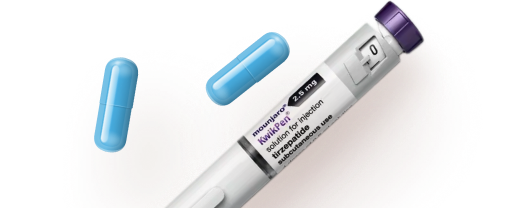
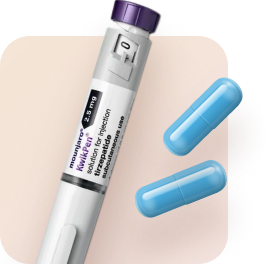
Mounjaro is supplied as a pre-filled, single-use KwikPen. Each pen contains one dose and is injected once a week.
Where to inject
Mounjaro is given as a subcutaneous injection, meaning just under the skin rather than into a vein or muscle. The three approved sites are:
- The abdomen (stomach area, avoiding the area immediately around the navel)
- The outer thigh
- The upper arm
Good to know
Rotating between sites each week helps prevent skin irritation and lumps forming at the injection site.
How to inject
- Remove the pen from the fridge and allow it to reach room temperature for 15 to 30 minutes — cold injections are more uncomfortable.
- Clean the injection site with an alcohol wipe and allow it to dry.
- Remove the base cap and attach a needle if not pre-attached.
- Press the pen firmly against the skin at a 90-degree angle.
- Press and hold the injection button until you hear a click, then hold for a further 10 seconds to ensure the full dose is delivered.
- Remove the pen, dispose of the needle safely in a sharps bin, and recap the pen.
The dosing schedule
Treatment starts at 2.5 mg per week for the first four weeks. This starter dose is not a therapeutic dose, it is designed to let your body adjust and minimise side effects. The dose then increases every four weeks as follows:
- Weeks 1–4: 2.5 mg
- Weeks 5–8: 5 mg
- Weeks 9–12: 7.5 mg (if needed)
- Weeks 13–16: 10 mg (if needed)
- Weeks 17–20: 12.5 mg (if needed)
- Week 21 onwards: 15 mg (if needed and tolerated)
Not everyone titrates to the maximum dose. Many people achieve their target outcomes at 10 mg or below, and your prescriber will guide the decision based on your results and tolerance.
How quickly does Mounjaro start to work?
This is one of the most common questions from people starting treatment. The honest answer is that Mounjaro begins acting in the body from the first dose, but different effects appear at different speeds.
Within 24 to 48 hours
Many people notice subtle changes in appetite within 24 to 48 hours of their first injection, feeling full sooner during meals or finding that cravings feel less urgent. This is the GLP-1 signalling in the brain taking effect.
Week 1 to 2
Appetite suppression typically becomes more consistent across the week, though some people notice it fades slightly 4 to 5 days after the injection in the early weeks before a steady state is reached.
Good to know
Blood sugar improvements in people with type 2 diabetes can begin in the first week, as insulin secretion improves with each meal.
Weeks 2 to 4
It takes around four weeks for Mounjaro to reach a steady state in the body. Some patients see a small drop on the scales within the first two weeks, though this is often water weight rather than fat loss. By week 4, most people are eating noticeably less and beginning to lose body fat.
Months 1 to 3
On average, people lose around 4% of their body weight by month one, 6% by month two, and 9% by month three, based on SURMOUNT-1 trial data. This is also the phase where dose increases are happening, and each step up typically brings a renewed reduction in appetite.
Months 3 to 12
The largest changes in body weight are usually seen between months 3 and 12. This is when most people are on their maintenance dose and the compounding effect of sustained calorie reduction becomes most visible.
Months 12 to 18
Long-term data from the SURMOUNT trials show continued weight loss up to 72 weeks, with average total weight loss reaching 20.9% on the highest dose. However, the rate of loss typically slows after the first six months.
Warning!
Do not stop prescription treatment without speaking to your UK-registered prescriber first. If you wish to discontinue, a UK-registered prescriber can advise on a safe approach and help you put a plan in place to support long-term weight maintenance.
Summary timeline
| Timeframe | What to expect |
|---|---|
| 24–48 hours | Subtle appetite changes, earlier fullness |
| Week 1–2 | More consistent appetite suppression; blood sugar improvements begin (T2D) |
| Week 4 | Steady-state blood levels reached; early weight loss beginning |
| Month 1 | Average 4% body weight loss in trials |
| Months 3–6 | Most rapid weight loss phase; dose titration continuing |
| Months 6–12 | Continued but slowing weight loss; approaching maintenance dose |
| Months 12–18 | Results plateau; maintenance phase |
Factors that affect how quickly Mounjaro works
Results vary considerably between individuals. The key factors are:
- Starting dose and titration pace: The 2.5 mg starter dose has a modest effect. Results accelerate as the dose increases.
- Diet and lifestyle: Mounjaro is not a replacement for dietary change. People who reduce portion sizes, cut ultra-processed foods, and increase activity levels consistently achieve better outcomes than those who rely on the medication alone.
- Starting weight and metabolic health: Individuals with higher starting weights often see larger absolute losses, though percentage loss tends to be comparable across body sizes.
- Individual metabolism: Factors including thyroid function, insulin resistance, gut microbiome composition, and genetics all influence how quickly the body responds.
- Consistency: Missing doses or failing to titrate on schedule slows progress. Once-weekly dosing on the same day each week produces the most stable blood levels.
What to expect: A realistic patient journey
Week 1
The first injection at 2.5 mg is a low, settling-in dose. Most people notice some reduction in appetite and possibly mild nausea the following day. Do not expect dramatic changes on the scales yet, this phase is about your body adjusting, not producing rapid results.
The first month
For many people, the first noticeable change is not the number on the scale but how they feel around food. Meals feel easier to manage, snacking reduces naturally, and cravings feel less intense. Some people lose a few pounds; others see little scale movement. Both are normal at this stage.
Months 2 to 6
This is where most people begin to see and feel meaningful progress. Dose increases bring renewed appetite suppression, weight loss accelerates, and for those with type 2 diabetes, blood sugar readings improve noticeably. This phase requires patience, results build gradually rather than arriving all at once.
Beyond 6 months
Weight loss slows as the body adapts and approaches a new set point. This is physiologically normal and not a sign that the medication has stopped working. Maintaining lifestyle habits is particularly important at this stage to sustain progress.
NHS and private care pathways
If you are on the NHS for type 2 diabetes, your GP or diabetes team will monitor HbA1c, weight, kidney function, and medication interactions at regular intervals. If you are accessing Mounjaro privately for weight management, your prescriber should conduct clinical check-ins at regular intervals, typically at 3 and 6 months, to review progress and adjust the dose.
Good to know
NICE recommends a formal review at 12 months to assess whether treatment should continue.
Next steps: A practical checklist
- Speak to your GP or a registered prescriber about whether Mounjaro is appropriate for you
- If accessing privately, confirm your provider is GPhC-registered at gphc.org.uk
- Set realistic expectations: appetite changes come first, visible weight loss follows over weeks and months
- Plan your injection day and keep it consistent each week
- Review your diet and consider support from a dietitian or nutritionist alongside treatment
- Ask your prescriber about the titration schedule and what to do if side effects are difficult to manage
- Book a review at 3 months to assess progress with your prescriber
- Report any unexpected side effects via the MHRA Yellow Card scheme at yellowcard.mhra.gov.uk
Final thoughts
The science behind Mounjaro is compelling, and the clinical trial results are among the strongest seen for any weight management or diabetes treatment to date. But tirzepatide works best as a tool alongside meaningful changes to diet, activity, and lifestyle, not as a standalone solution.
If you are considering Mounjaro or have recently started, the most important step is an honest conversation with your prescriber about your goals and what realistic progress looks like for you. Patience in the early weeks nearly always pays off.
FAQ
How quickly does Mounjaro start to work?
Mounjaro begins acting from the first dose. Many people notice appetite changes within 24 to 48 hours. Meaningful weight loss typically begins within 2 to 4 weeks, and the most significant results build over months 3 to 12.
How long does Mounjaro take to work?
Most people begin losing weight within 4 weeks. The greatest results are seen between months 3 and 12. Full results from the SURMOUNT trial programme were measured at 72 weeks, with average total weight loss of up to 20.9% on the highest dose.
Why does Mounjaro work better than older GLP-1 treatments?
Mounjaro activates both GIP and GLP-1 receptors, whereas medicines like semaglutide activate only GLP-1. The combined effect produces greater insulin sensitivity, broader appetite regulation, and larger average weight loss in head-to-head trials.
Does Mounjaro work immediately?
The pharmacological effects begin with the first dose, but the appetite-suppressing impact builds over the first few weeks as blood levels stabilise. Do not judge effectiveness in the first two weeks, give it at least a full month at the 5 mg dose before drawing conclusions.
Will Mounjaro work for me?
Clinical trials show that the large majority of people on Mounjaro lose a clinically meaningful amount of weight. However, individual results vary. Over 90% of participants on higher doses in SURMOUNT-1 lost at least 5% of their body weight, the threshold considered clinically significant for metabolic health. Your results will depend on your dose, how consistently you take the medication, and the lifestyle changes you make alongside it.
The DoktorABC medical advisory board

Dr. Roland Ruiken
Medical advisor, Norway

Dr. Viktor Simunovic
Medical advisor, Croatia