














Mounjaro doses: A complete guide to the titration schedule

- The complete UK titration schedule.
- A clear dosage chart.
- How the KwikPen works.
- Direct answers to safety questions.
- UK-specific guidance on titration flexibility, starter packs vs maintenance pens, and cost implications of dose increases.
- The Mounjaro titration schedule: Why it matters
- Mounjaro dosage chart: all UK doses at a glance
- How the Mounjaro KwikPen works
- Can I take two doses of 2.5 mg to make 5 mg?
- Missed doses and delayed injections
- UK-specific dosing guidance
- When a lower dose may be the right long-term choice
- Factors that affect how your dose is managed
- Final thoughts
The Mounjaro titration schedule: Why it matters
The way Mounjaro is dosed is not arbitrary. Starting low and increasing gradually, a process known as titration, is a deliberate clinical strategy designed to let your body adjust to tirzepatide's mechanism before reaching therapeutic doses.
Good to know
Skipping steps or increasing the dose too quickly significantly raises the risk of side effects, particularly nausea, vomiting, and gastrointestinal discomfort, without producing meaningfully better long-term results.
The starting dose of tirzepatide is 2.5 mg once weekly. After four weeks, the dose should be increased to 5 mg once weekly. If needed, dose increases can be made in 2.5 mg increments after a minimum of four weeks at each dose level. The maximum dose is 15 mg once weekly.
It is also worth being clear about one common misconception: the 2.5 mg starting dose is not a therapeutic dose. Its purpose is adjustment, not weight loss. The first therapeutic dose, where meaningful weight loss begins, is 5 mg. Some patients notice mild appetite changes at 2.5 mg; others feel very little. This is entirely normal and not a sign that the treatment is not working.
Mounjaro dosage chart: all UK doses at a glance
The table below covers the full titration schedule as approved by the MHRA, alongside average weight-loss data from the SURMOUNT-1 trial for context. Individual results can vary considerably.
| Step | Dose | Minimum duration | Purpose | Average weight loss at 72 weeks (SURMOUNT-1) |
|---|---|---|---|---|
| 1 | 2.5 mg | 4 weeks | Adjustment dose | Not applicable (titration dose only) |
| 2 | 5 mg | 4 weeks | First therapeutic dose | 15% of starting body weight |
| 3 | 7.5 mg | 4 weeks | Intermediate titration | Approaching 10 mg results |
| 4 | 10 mg | 4 weeks | Common maintenance dose | 19.5% of starting body weight |
| 5 | 12.5 mg | 4 weeks | Intermediate titration | Approaching 15 mg results |
| 6 | 15 mg | Ongoing if tolerated | Maximum maintenance dose | 20.9% of starting body weight |
Source: Mounjaro Summary of Product Characteristics (MHRA, current version, medicines.org.uk); SURMOUNT-1, Jastreboff et al., NEJM, June 2022. Results are averages from clinical trials. Individual outcomes vary and are not guaranteed.
A few important points about this schedule:
- The four-week interval between dose increases is a minimum, not a fixed deadline. If you are experiencing significant side effects, your prescriber may recommend staying at your current dose for longer before moving up.
- Not everyone needs to reach 15 mg. Many people achieve their weight-loss or glycaemic goals at 5 mg, 10 mg, or an intermediate dose. Your prescriber will guide this based on your results and tolerance.
- 7.5 mg and 12.5 mg are used as intermediate titration steps rather than final maintenance doses for most patients, though individual response determines where any particular person ends up.
How the Mounjaro KwikPen works
Understanding the pen itself is important for safe and correct use, and helps explain why certain dosing practices circulating online are unsafe.
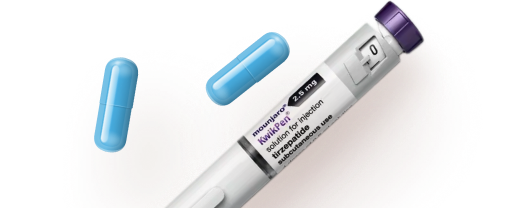
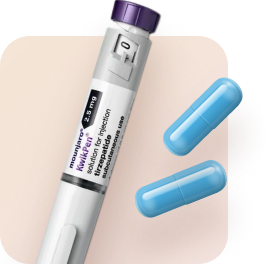
Each Mounjaro KwikPen is a multiple-dose, disposable pre-filled pen that contains four doses of 0.6 ml solution. Each pen delivers four doses of the same strength, one dose per week, for a total of four weeks. This means one pen equals one month of treatment at any given dose level.
The six KwikPen strengths available in the UK are:
- 2.5 mg per dose (4 doses per pen)
- 5 mg per dose (4 doses per pen)
- 7.5 mg per dose (4 doses per pen)
- 10 mg per dose (4 doses per pen)
- 12.5 mg per dose (4 doses per pen)
- 15 mg per dose (4 doses per pen)
Each pen is dose-specific. You cannot adjust the dose by using the same pen differently. When your prescriber increases your dose, you will need a new pen at the higher strength.
Storage
Store Mounjaro in a refrigerator at 2 to 8 degrees Celsius. Do not freeze. If the pen has been frozen, do not use it. Once in use, the KwikPen can be stored unrefrigerated at a temperature not above 30 degrees Celsius for up to 30 days after first use, after which it must be discarded. Store in the original packaging to protect from light.
Injection technique
Mounjaro is administered as a subcutaneous injection, meaning just under the skin rather than into a vein or muscle. The three approved injection sites are the abdomen, the outer thigh, and the upper arm. Rotate between sites with each weekly injection to avoid skin reactions or lumps forming at any one site.
Key injection steps:
- Remove the pen from the fridge and allow it to reach room temperature for 15 to 30 minutes before injecting.
- Clean the injection site with an alcohol wipe and allow it to dry.
- Remove the base cap from the pen.
- Press the pen firmly against the skin at a 90-degree angle.
- Press and hold the injection button until you hear a click, then continue holding for a full 10 seconds to ensure the complete dose is delivered.
- Remove the pen, dispose of the needle safely in a sharps bin, and replace the cap.
Good to know
Mounjaro can be injected at any time of day, with or without food. Try to use it on the same day each week to maintain consistent blood levels.
Can I take two doses of 2.5 mg to make 5 mg?
This is one of the most commonly searched Mounjaro dosing questions, and the answer is a clear and unambiguous no.
Taking two doses of 2.5 mg to approximate a 5 mg dose is not safe, not approved, and not recommended by Eli Lilly, the MHRA, or any regulated UK prescriber. Here is why.
1. Inaccurate dosing
Each KwikPen delivers a fixed, pre-measured dose of 0.6 ml. Taking two separate injections does not replicate the pharmacokinetic profile of a single 5 mg dose. The absorption, peak concentration, and duration of action are different when two smaller doses are administered, even if the arithmetic appears equivalent.
2. Overdose risk
Administering two injections in quick succession significantly increases the risk of side effects associated with dose escalation, including severe nausea, vomiting, dehydration, and in serious cases, a risk of acute pancreatitis. These risks are precisely why the titration schedule exists.
3. Sterility and pen design
Each KwikPen is designed to deliver four fixed doses and should be discarded after the fourth dose. Using a pen for an additional injection, or attempting multiple injections in one session, risks contamination and bypasses the pen's safety design.
4. It is not prescribed
Any dose of Mounjaro you take should be exactly as prescribed by your UK-registered prescriber.
Important!
Self-adjusting your dose, in any direction, without clinical authorisation is outside the terms of your prescription and removes the clinical oversight that makes the treatment safe.
If you feel ready to move to the next dose, the correct step is to contact your prescriber, who will assess your tolerance and progress before authorising the increase.
What happens if I take two doses of Mounjaro?
If you accidentally take two doses of Mounjaro, or realise you have injected twice in one week, contact your prescriber or call NHS 111 promptly. Do not administer your next scheduled dose until you have received clinical guidance.
Important!
Monitor for symptoms of overdose including severe nausea, vomiting, rapid heart rate, and severe abdominal pain. If symptoms are serious, seek emergency medical help.
Missed doses and delayed injections
Life happens, and missing an occasional dose does not mean your treatment has failed. If you miss a dose of Mounjaro, administer it as soon as you remember, as long as your next scheduled injection is at least four days away. If your next injection is due in less than four days, skip the missed dose and resume on your usual scheduled day.
Never take two doses in the same week to make up for a missed injection. Your next dose should always be at least four days after the previous one.
If you have missed several weeks of treatment, gastrointestinal side effects may return when you restart, similar to the experience of starting for the first time. Some prescribers recommend reverting to a lower dose after a prolonged break. Always discuss restarting with your prescriber rather than resuming at your previous dose without guidance.
UK-specific dosing guidance
The titration schedule is the same regardless of where you access Mounjaro in the UK, but the prescribing pathway, pace of dose increases, and cost implications differ between NHS and private routes. Here is what you need to know.
NHS vs private prescribing
On the NHS, Mounjaro is available for type 2 diabetes where it meets NICE criteria (TA924), and for weight management through specialist tier 3/4 services under NICE TA1026. NHS titration follows the MHRA-approved schedule, with prescribers making dose increase decisions based on clinical review.
In private clinic settings, the same MHRA-approved schedule applies, but there is typically more flexibility in the pace of titration. A private prescriber may, for example, recommend staying at 5 mg for longer than four weeks if side effects are significant, or may delay a dose increase pending a clinical check-in. This flexibility is a feature of supervised private prescribing, not a licence for patients to self-adjust.
Starter packs and maintenance pens
Some private providers offer a starter pack containing the first two or three pens (2.5 mg and 5 mg), often at a slightly reduced introductory price. These are designed for the titration phase. Once you reach your maintenance dose, you will order that dose pen monthly. Each pen contains four doses, so one pen equals one month of treatment at any dose.
Cost implications of dose increases
Each dose step upward typically increases the monthly cost. Following the September 2025 Eli Lilly price increase, the cost difference between a 5 mg pen and a 15 mg pen is significant among most UK providers. This is worth factoring into long-term budgeting.
When a lower dose may be the right long-term choice
Not every patient needs to reach 15 mg, and staying on a lower maintenance dose is entirely valid clinically if it is producing the results you need without significant side effects.
Your prescriber may recommend maintaining a lower dose long term if:
- You have achieved your target weight loss or glycaemic control at 5 mg or 10 mg.
- Side effects at higher doses are persistent and affect your quality of life.
- You are managing treatment alongside other medications that interact with dose escalation.
- Cost is a genuine barrier to sustaining higher doses long term.
The goal of titration is to find the lowest dose that delivers clinically meaningful results for you as an individual, not to reach the maximum dose as quickly as possible.
Factors that affect how your dose is managed
Several individual factors influence both how quickly you titrate and where you end up long term:
- Side-effect tolerance: Gastrointestinal side effects are the main reason titration slows. If nausea or vomiting is significant at a given dose, your prescriber will typically recommend staying there longer before increasing further.
- Weight-loss progress: If you are losing weight steadily at your current dose, there may be no clinical reason to increase. More is not always better.
- Glycaemic control (for type 2 diabetes): HbA1c targets influence dose decisions for diabetic patients, and a lower dose may be sufficient to meet glycaemic goals.
- Consistency: Missing doses disrupts the steady-state blood levels that drive appetite suppression. Consistent weekly dosing on the same day produces more predictable results and makes dose management more straightforward.
Final thoughts
Mounjaro's titration schedule is one of its most important safety features, not a bureaucratic inconvenience. The gradual dose increase is what makes the treatment tolerable for most people, and the flexibility to stay at a lower dose long term means that the right dose is the one that works for you, not necessarily the highest available.
If you are ever tempted to self-adjust, double up, or use unofficial dosing practices you have seen online, the safest thing you can do is contact your prescriber instead. A short conversation is all it takes to get the right guidance, and it could prevent a significant and avoidable adverse event.
FAQ
What are the Mounjaro doses available in the UK?
Mounjaro is available in six dose strengths in the UK: 2.5 mg, 5 mg, 7.5 mg, 10 mg, 12.5 mg, and 15 mg. All are administered once weekly by subcutaneous injection using the KwikPen.
What does the Mounjaro dosage chart look like?
Treatment starts at 2.5 mg for four weeks, then increases to 5 mg for at least four weeks. Subsequent increases of 2.5 mg can be made every four weeks as needed, up to a maximum of 15 mg. See the full dosage chart earlier in this article for clinical trial weight-loss data at each dose level.
How many doses are in a Mounjaro pen?
Each Mounjaro KwikPen contains four doses of the same strength, one dose per week, giving four weeks of treatment per pen. One pen equals one month of supply.
Can I take two doses of 2.5 mg Mounjaro to make 5 mg?
No. This is unsafe and not approved. Taking two doses does not replicate the pharmacokinetic profile of a single 5 mg injection and significantly increases the risk of side effects including severe nausea and vomiting. If you are ready to increase your dose, speak to your prescriber.
What happens if I take two doses of Mounjaro?
Contact your prescriber or NHS 111 promptly. Do not take your next scheduled dose until you have received clinical guidance. Monitor for severe nausea, vomiting, rapid heart rate, or abdominal pain. If symptoms are serious, seek emergency help.
What should I do if I miss a Mounjaro dose?
If your next scheduled injection is at least four days away, administer the missed dose as soon as you remember. If it is less than four days until your next dose, skip the missed one and resume your usual schedule. Never take two doses in the same week.
What is the maximum Mounjaro dose in the UK?
The maximum approved dose is 15 mg once weekly. No clinical benefit has been demonstrated at doses above this, and self-administering above the prescribed dose is unsafe.
Do I need a different pen for each Mounjaro dose?
Yes. Each KwikPen is manufactured at a specific dose strength and delivers four fixed doses of that strength. When your prescriber increases your dose, you will need to order the next pen strength. You cannot manually adjust the dose using the same pen.
How long does it take to reach the maintenance dose of Mounjaro?
Following the standard titration schedule, it takes a minimum of 20 weeks to reach the maximum dose of 15 mg. In practice, many patients titrate more slowly, taking 6 to 12 months to find their optimal maintenance dose.
The DoktorABC medical advisory board

Dr. Roland Ruiken
Medical advisor, Norway

Dr. Viktor Simunovic
Medical advisor, Croatia