














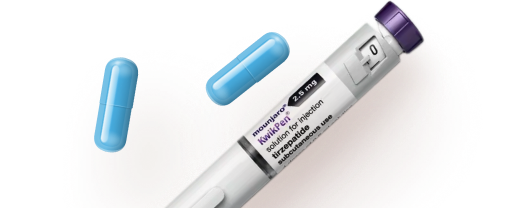


Orlistat vs Mounjaro: Which weight-loss treatment is right for you?

- How the mechanism of each medication works
- What the clinical evidence shows regarding the efficacy of each medication
- Side effect profiles: A direct comparison of what to expect
- UK eligibility and NICE prescribing criteria for both
- Which option is right for different health profiles
- Whether they can be taken together
How they work
Orlistat and Mounjaro act through entirely different mechanisms, which explains both their different efficacy profiles and their different side effect patterns.
Orlistat is a lipase inhibitor. It blocks the enzymes in the gut that break down dietary fat, preventing approximately one third of consumed fat from being absorbed. It has no effect on appetite, hormones, or blood sugar. Weight loss comes from the resulting reduction in caloric absorption, alongside the dietary changes the medicine encourages.
Mounjaro (tirzepatide) is a dual GIP and GLP-1 receptor agonist. It mimics two naturally occurring gut hormones that regulate appetite, digestion, and insulin secretion. It reduces hunger and cravings by acting on the brain's appetite centres, slows gastric emptying to prolong feelings of fullness, and improves insulin sensitivity. It does not act on dietary fat directly.
| Feature | Orlistat | Mounjaro (tirzepatide) |
|---|---|---|
| Mechanism | Lipase inhibitor: blocks fat absorption | Dual GIP/GLP-1 agonist: reduces appetite, slows digestion |
| Average weight loss | 5 to 10% of body weight (NICE TA22) | 15 to 22.5% of body weight (SURMOUNT trials) |
| Administration | Oral capsule, up to three times daily with meals | Once-weekly subcutaneous injection |
| Main side effects | Oily stools, urgent bowel movements, fat-soluble vitamin depletion | Nausea, vomiting, diarrhoea, injection-site reactions |
| Daily planning required | Yes, taken with each meal containing fat | No, once weekly |
| Licensed for type 2 diabetes | No | Yes |
| NHS availability | Widely available (NICE TA22) | Specialist services (NICE TA1026) |
| Approximate monthly cost (private) | £30 - £60 | £120 - £340 depending on dose |
Efficacy: what the evidence shows
The clinical trial evidence shows a substantial difference in average weight loss between the two medicines. Let’s look at the trial data to understand more.
NICE TA22 data shows that patients taking orlistat alongside an appropriate diet and exercise programme lost an average of 5 to 10% of their starting body weight over 12 months, with those on orlistat losing an average of 5.8% more than those on placebo.
The SURMOUNT-1 trial showed that participants on Mounjaro 15 mg lost an average of 20.9% of their starting body weight over 72 weeks, with those who completed the full trial on treatment achieving an average of 22.5%.
The efficacy gap is substantial. However, it should be considered alongside the differences in mechanism, cost, side effects, and suitability. A larger average weight loss does not automatically make Mounjaro the right choice for every patient.
Good to know
Both figures represent averages from clinical trials conducted with structured dietary support and regular follow-up. Real-world results for both medicines are typically somewhat lower, with adherence and lifestyle factors being the strongest predictors of outcome in both cases.
Side effects: What to expect from each
Because orlistat and Mounjaro work through entirely different mechanisms, their side effect profiles are also quite different. The table below sets out the key comparisons, followed by a brief explanation of each.
| Side effect | Orlistat | Mounjaro |
|---|---|---|
| Oily or fatty stools | Very common | Not applicable |
| Urgent bowel movements | Very common | Not applicable |
| Nausea | Not typical | Very common |
| Vomiting | Not typical | Common |
| Diarrhoea | Related to fat intake | Very common |
| Constipation | Uncommon | Very common |
| Injection-site reactions | Not applicable | Very common |
| Fat-soluble vitamin depletion | Yes, supplement required | Not applicable |
| Pancreatitis (rare) | Rare | Rare |
Orlistat's side effects are directly tied to dietary fat intake and reduce significantly with a low-fat diet. Mounjaro's GI side effects are systemic and most pronounced during the titration phase, typically improving over time.
Important !
Both medicines share a rare risk of pancreatitis. Seek urgent medical attention for severe, persistent abdominal pain that radiates to the back while taking either medicine.
Administration: Tablet vs injection
Orlistat is taken orally as a capsule up to three times daily with fat-containing meals. It requires consistent daily engagement with the dosing schedule and dietary planning.
Mounjaro is a once-weekly subcutaneous injection using a pre-filled pen. Most patients adapt quickly to the injection process, though it does require you to be comfortable with self-administration. The once-weekly dosing requires significantly less day-to-day management than orlistat.
For patients who are uncomfortable with injections, orlistat's oral format is a meaningful practical advantage. For those who find daily medication management difficult, Mounjaro's once-weekly dosing may suit better.
UK eligibility and prescribing
Orlistat is available on the NHS under NICE TA22 for adults with a BMI of 28 or above with associated risk factors, or 30 or above without. It is also available in a lower 60 mg dose (Alli) over the counter from pharmacies.
Mounjaro is available on the NHS through specialist tier 3/4 weight management services under NICE TA1026, with strict eligibility criteria. For most patients, it is accessed via private prescription. It is also licensed for type 2 diabetes, where it may be prescribed by a GP on the NHS.
Important !
Always confirm your chosen provider is GPhC-registered at gphc.org.uk before accessing either medicine privately.
Who each option suits
Before starting either treatment, it is important to evaluate which option is best for your personal health profile. Decisions should always be discussed with a UK-registered prescriber.
Orlistat may suit you better if you:
- Prefer an oral medicine and are uncomfortable with injections
- Are cost-conscious and seeking an affordable first-line option
- Have a diet high in fat that you are committed to reducing
- Meet NHS eligibility criteria and can access it without private cost
- Are looking for a well-established treatment with a long safety record
Mounjaro may suit you better if you:
- Require more substantial weight loss to address cardiovascular, metabolic, or joint health concerns
- Have type 2 diabetes and would benefit from the dual glucose-lowering and weight-loss effect
- Are comfortable with weekly self-injection
- Have tried orlistat and found the results insufficient
- Can sustain the higher private prescription cost
Can you take orlistat and Mounjaro together?
There is no established formal contraindication between the two medicines, but combining them is off-label and requires individual prescriber assessment. The two act through entirely different mechanisms and there is no robust clinical evidence base either supporting or advising against the combination as a standard approach.
Important !
Do not combine orlistat and Mounjaro without explicit prescriber guidance. If your current treatment is not producing the results you hoped for, a prescriber review is the appropriate next step.
Final thoughts
Orlistat and Mounjaro are both legitimate, evidence-based options for weight management in the UK, suited to different patients for different reasons. Orlistat is affordable, oral, and well-established, but requires active dietary engagement and produces more modest results. Mounjaro is more potent and convenient to dose, but at a significantly higher cost and requiring weekly injection.
The right choice depends on your health profile, weight-loss goals, and individual circumstances.
FAQ
Is Mounjaro more effective than orlistat?
Clinical trial data shows substantially greater average weight loss with Mounjaro than with orlistat. However, the right choice depends on individual health profile, eligibility, preferences, and cost. Neither is appropriate for everyone.
Which has fewer side effects, orlistat or Mounjaro?
Both have GI side effects but of different types. Orlistat's are diet-dependent and reduce with a low-fat diet. Mounjaro's are systemic and most pronounced during titration. Individual tolerance varies considerably.
Can I switch from orlistat to Mounjaro?
Yes, under prescriber guidance. If orlistat has not produced sufficient results, a prescriber can assess whether Mounjaro is appropriate for your circumstances and advise on how to transition safely.
Is orlistat available on the NHS?
Yes, more widely than Mounjaro. Orlistat is available on the NHS under NICE TA22 for patients meeting the BMI criteria. Mounjaro for weight management is available through specialist NHS services only, with strict eligibility requirements.
How much does each medicine cost privately?
Orlistat is significantly more affordable, typically £30 to £60 per month from regulated UK providers. Mounjaro ranges from approximately £120 to £340 per month depending on dose, reflecting the 2025 price increase.
The DoktorABC medical advisory board

Dr. Roland Ruiken
Medical advisor, Norway

Dr. Viktor Simunovic
Medical advisor, Croatia