















Wegovy vs Mounjaro: A complete UK comparison guide

- How Wegovy and Mounjaro work differently
- What the clinical trials actually show
- A full dosage comparison
- An honest side-effect comparison
- What each treatment costs in 2026
- Practical guidance on which may suit you better
- What are Wegovy and Mounjaro?
- How they work: single vs dual mechanism
- Efficacy: what the clinical trials show
- Dosage: full titration schedules
- Side effects: how do they compare?
- Cost comparison: Wegovy vs Mounjaro in 2026
- Typical monthly private prescription prices (2026)
- Real-world patient experience: common themes
- Who might benefit more from each treatment?
- Final thoughts
What are Wegovy and Mounjaro?
Before comparing the two treatments, it is worth understanding what each one is, who it is licensed for, and how it is currently accessed in the UK.
Wegovy (semaglutide 2.4 mg, manufactured by Novo Nordisk) is a once-weekly injectable GLP-1 receptor agonist, licensed in the UK for chronic weight management in adults with a BMI of 30 or above, or 27 or above with a weight-related health condition. It is also available as Ozempic at lower doses for type 2 diabetes.
Good to know
Wegovy has NICE approval for NHS use within specialist weight management services, though access remains restricted and waiting times are long in most areas.
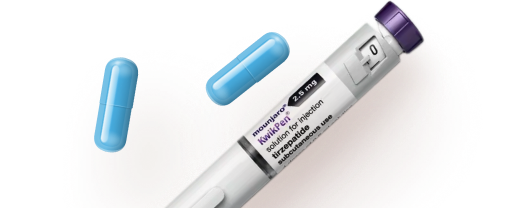
Mounjaro (tirzepatide, manufactured by Eli Lilly) is a once-weekly injectable dual GIP and GLP-1 receptor agonist, licensed in the UK for type 2 diabetes and weight management under the same BMI criteria. NHS access for weight loss is available through specialist tier 3/4 services from June 2025 onwards, though eligibility criteria are strict. For most people, both treatments are accessed via private prescription.
Good to know
Both are prescription-only medicines that must be assessed and issued by a UK-registered prescriber.
How they work: single vs dual mechanism
Perhaps the most fundamental difference between the two treatments is the single vs. dual mechanism. Let’s break it down.
Wegovy activates GLP-1 receptors only. GLP-1 is a gut hormone released after eating that stimulates insulin secretion, suppresses glucagon, slows gastric emptying, and signals the brain to reduce hunger. Semaglutide mimics this hormone, producing meaningful appetite suppression and blood sugar regulation.
Mounjaro activates both GLP-1 and GIP receptors simultaneously. GIP is a second gut hormone that enhances insulin secretion, improves insulin sensitivity, and influences how the body handles energy at a cellular level. Activating both pathways together produces a broader metabolic effect than either hormone could achieve alone.
| Action | Wegovy (semaglutide) | Mounjaro (tirzepatide) |
|---|---|---|
| GLP-1 receptor activation | Yes | Yes |
| GIP receptor activation | No | Yes |
| Insulin secretion after meals | Yes | Yes, enhanced |
| Glucagon suppression | Yes | Yes |
| Slows gastric emptying | Yes | Yes |
| Brain appetite signalling | Yes | Yes |
| Improved insulin sensitivity | Modest | Greater |
| Reduced liver glucose output | Yes | Yes |
Good to know
In practical terms, the dual mechanism is thought to be the main reason Mounjaro produces greater average weight loss in clinical trials, though the introduction of the Wegovy 7.2 mg dose has significantly narrowed that gap.
Efficacy: what the clinical trials show
Clinical trials are the most reliable way to compare how well two treatments work. The data for Wegovy and Mounjaro is now more complete than for almost any other weight-loss medicines, thanks to years of large-scale studies and, crucially, the first direct head-to-head trial published in 2025.
SURMOUNT-5: the head-to-head trial
The most important study for this comparison is SURMOUNT-5, published in the New England Journal of Medicine in May 2025. The first direct head-to-head trial of its kind, it ran over 72 weeks and compared tirzepatide and semaglutide in adults without type 2 diabetes. Participants on Mounjaro 15 mg lost an average of 20.2% of their body weight, compared to 13.7% on Wegovy 2.4 mg. Around 45% of Mounjaro participants achieved at least 25% weight loss, compared to 19% on Wegovy, and waist circumference reduction was greater too: 18.4 cm vs 13 cm.
The Wegovy 7.2 mg development
This comparison shifted in January 2026. On 6 January 2026, the MHRA licensed a new 7.2 mg dose of Wegovy, three times higher than the previously available 2.4 mg dose. The Phase 3b STEP UP trial found that patients lost an average of 20.7% of their body weight with the 7.2 mg dose, compared to 17.5% with the standard 2.4 mg dose over 72 weeks. Significantly, 33.2% of patients on the higher dose achieved 25% or more weight loss.
This means that at maximum doses, Wegovy 7.2 mg and Mounjaro 15 mg now produce broadly comparable average weight loss (20.7% vs 20.2%). However, Wegovy 7.2 mg is not a starting dose. It is intended for patients who have completed the full titration pathway to 2.4 mg and continue to experience persistent hunger or have reached a weight plateau on lower doses.
Key trial data
| Trial | Drug | Average weight loss | Duration |
|---|---|---|---|
| SURMOUNT-5 (NEJM, May 2025) | Mounjaro 15 mg | 20.2% | 72 weeks |
| SURMOUNT-5 (NEJM, May 2025) | Wegovy 2.4 mg | 13.7% | 72 weeks |
| STEP UP (November 2025) | Wegovy 7.2 mg | 20.7% | 72 weeks |
| SURMOUNT-1 (NEJM, 2022) | Mounjaro 15 mg | 22.5% | 72 weeks |
| STEP 1 (NEJM, 2021) | Wegovy 2.4 mg | 14.9% | 68 weeks |
All figures represent average weight loss in adults with obesity or overweight. Individual results vary. Always discuss realistic expectations with your prescriber.
Dosage: full titration schedules
Both treatments follow a gradual titration schedule, starting at a low dose to minimise side effects and increasing every four weeks.
Wegovy titration schedule
| Week | Dose |
|---|---|
| Weeks 1–4 | 0.25 mg |
| Weeks 5–8 | 0.5 mg |
| Weeks 9–12 | 1 mg |
| Weeks 13–16 | 1.7 mg |
| Week 17 onwards | 2.4 mg (standard maintenance) |
| After 4+ weeks at 2.4 mg, if eligible | 7.2 mg (higher maintenance dose) |
Mounjaro titration schedule
| Week | Dose |
|---|---|
| Weeks 1–4 | 2.5 mg |
| Weeks 5–8 | 5 mg |
| Weeks 9–12 | 7.5 mg |
| Weeks 13–16 | 10 mg |
| Weeks 17–20 | 12.5 mg |
| Week 21 onwards | 15 mg |
Both are once-weekly subcutaneous injections, self-administered into the abdomen, outer thigh, or upper arm.
Good to know
Not everyone needs to reach the maximum dose; many people achieve their target outcomes at a lower maintenance level, and your prescriber will guide this decision based on your results and tolerance.
Switching between treatments
Switching from one treatment to the other is possible under medical supervision. There is no evidence of harmful interactions from switching. Your UK-registered prescriber will assess your treatment history and advise on the most appropriate starting dose for the new medication.
Side effects: how do they compare?
The side effect profiles of Wegovy and Mounjaro are broadly similar, as both activate GLP-1 receptors. The table below summarises the key comparisons based on MHRA prescribing information and SURMOUNT-5 trial data.
| Side effect | Wegovy | Mounjaro | Notes |
|---|---|---|---|
| Nausea | Very common | Very common | Most common in both; peaks at dose increases |
| Vomiting | Common | Very common | Reported more frequently with Mounjaro |
| Diarrhoea | Very common | Very common | Similar in both; improves over time |
| Constipation | Very common | Very common | Similar profile |
| Burping / indigestion | Common | Very common | More frequently reported with Mounjaro |
| Injection-site reactions | Very common | Very common | Both comparable; rotate sites to minimise |
| Fatigue | Common | Common | Similar in both |
| Dizziness | Common | Common | Mainly at dose increases |
| Hair loss | Common | Common | Linked to rapid weight loss in both |
| Facial changes | Reported | Reported | Consequence of rapid fat loss, not a direct drug effect |
| Pancreatitis | Rare | Rare | Class-wide risk; seek urgent help with severe abdominal pain |
| Thyroid concerns | Contraindicated: MTC/MEN2 | Contraindicated: MTC/MEN2 | Animal data only; no confirmed human cases |
| Gallbladder issues | Uncommon | Uncommon | Weight-loss related; similar risk in both |
The most commonly reported adverse events in SURMOUNT-5 for both treatments were gastrointestinal-related and were generally mild to moderate in severity. There is some evidence that vomiting and burping are reported slightly more frequently with Mounjaro, though neither treatment is clearly better tolerated across all measures.
Warning!
Both treatments share the same contraindications: they must not be used by people with a personal or family history of medullary thyroid carcinoma (MTC) or Multiple Endocrine Neoplasia type 2 (MEN 2), or those who are pregnant or breastfeeding.
A full medication review with your UK-registered prescriber is essential before starting either treatment. Any suspected side effects from either medicine should be reported to the MHRA via the Yellow Card scheme.
Cost comparison: Wegovy vs Mounjaro in 2026
Before September 2025, Mounjaro and Wegovy were broadly similar in price across most UK private providers. That changed when Eli Lilly increased Mounjaro's UK wholesale price by up to 170%, aligning it with other developed markets. Wegovy is now meaningfully cheaper at every dose stage for most providers. The gap is roughly £600 to £1,100 over a full year of treatment at maintenance doses.
Typical monthly private prescription prices (2026)
| Treatment | Typical monthly range | Notes |
|---|---|---|
| Wegovy 0.25–1 mg (titration) | £100–£180 | Starter doses |
| Wegovy 2.4 mg (standard maintenance) | £169–£289 | Most common maintenance dose |
| Wegovy 7.2 mg (higher maintenance) | £250–£340 | Currently administered as three 2.4 mg pens |
| Mounjaro 2.5–5 mg (titration) | £120–£249 | Starter doses |
| Mounjaro 10–15 mg (maintenance) | £249–£375 | Post-2025 price increase |
Prices based on GPhC-registered UK provider data, April 2026. Always confirm current pricing and exactly what is included before ordering.
NHS access
Both treatments are available on the NHS for eligible patients, at the standard prescription charge of £9.90 per item in England (free in Scotland, Wales, and Northern Ireland for eligible patients). In both cases, NHS access is restricted to specialist services with strict eligibility criteria and significant waiting times in most regions. Speak to your GP about whether a referral may be appropriate.
Real-world patient experience: common themes
Clinical trial data shows what both treatments can achieve under controlled conditions. In real-world UK settings, a number of consistent themes emerge from patient-reported outcomes.
With Mounjaro, patients commonly report:
- Rapid and sustained reduction in appetite, often described as "food noise" disappearing
- Faster and more pronounced weight loss, particularly at higher doses
- Slightly more pronounced gastrointestinal side effects in the early weeks, especially burping and nausea
- Concerns about cost following the 2025 price increase, prompting some to switch to Wegovy
With Wegovy, patients commonly report:
- Gradual, steady weight loss that builds over the titration period
- Good tolerability for most people at standard doses
- More manageable monthly costs, particularly post-2025
- Some patients plateau at 2.4 mg and benefit from the new 7.2 mg dose option
In both cases, patients who combine treatment with structured dietary changes and regular physical activity consistently report better outcomes than those who rely on medication alone.
Who might benefit more from each treatment?
Neither treatment is objectively better for every person. The right choice depends on your individual health profile, goals, budget, and tolerability. The guidance below is illustrative, not prescriptive; always discuss with your UK-registered prescriber.
Mounjaro may be worth discussing if you:
- Have type 2 diabetes and would benefit from the dual glucose-lowering and weight-loss effect
- Have a higher starting BMI and are aiming for the greatest possible weight reduction
- Are not primarily driven by cost and prioritise maximum efficacy at standard doses
- Have already tried a GLP-1 only treatment with limited results
Wegovy may be worth discussing if you:
- Are primarily focused on weight management without a diabetes diagnosis
- Are cost-conscious, particularly at maintenance doses post-2025
- Have already been established on semaglutide (Ozempic) for diabetes and are transitioning to a higher weight-management dose
- Are a candidate for the new 7.2 mg dose and want results comparable to Mounjaro at a lower cost
Final thoughts
The gap between Wegovy and Mounjaro has narrowed considerably in 2026. Mounjaro still holds an efficacy advantage at standard doses, but the approval of Wegovy 7.2 mg means that for patients who titrate fully, results are now broadly comparable. The more meaningful difference for most private patients is cost, where Wegovy has a clear advantage following the 2025 Mounjaro price increase.
Ultimately, the best choice is the one that is clinically appropriate for you, sustainable over the long term, and supported by a prescriber who knows your health history. If you are weighing up the options, start that conversation with your GP or a UK-registered prescriber rather than deciding on the basis of trial averages alone.
FAQ
Wegovy vs Mounjaro for weight loss: which produces better results?
At standard doses, Mounjaro produces greater average weight loss (20.2% vs 13.7% in SURMOUNT-5, NEJM, May 2025). However, the new Wegovy 7.2 mg dose achieves approximately 20.7% average weight loss, broadly in line with Mounjaro's maximum dose. Individual results vary considerably, and the best treatment for you depends on your health profile, tolerability, and budget.
Wegovy vs Mounjaro cost: which is cheaper in the UK?
Following Eli Lilly's September 2025 price increase for Mounjaro, Wegovy is now generally the more affordable option across most dose levels. The difference is approximately £600 to £1,100 over a full year at maintenance doses. Always compare total costs including consultation, delivery, and follow-up before choosing a provider.
Wegovy vs Mounjaro side effects: are they different?
The side effect profiles are broadly similar, as both activate GLP-1 receptors. Vomiting and burping are reported slightly more frequently with Mounjaro. Both share the same serious risk warnings, including pancreatitis, thyroid concerns, and gallbladder issues. Neither is clearly better tolerated across all measures.
Wegovy vs Mounjaro dosage: how do the schedules compare?
Wegovy titrates from 0.25 mg to 2.4 mg over 16 weeks, with the new 7.2 mg option available for eligible patients at maintenance. Mounjaro titrates from 2.5 mg to 15 mg over 20 weeks. Both are once-weekly injections.
Wegovy vs Mounjaro UK: are both available privately?
Yes. Both are available via private prescription from GPhC-registered UK providers following a medical assessment by a UK-registered prescriber. NHS access exists for both but remains limited and subject to strict eligibility criteria.
Can I switch from Wegovy to Mounjaro or vice versa?
Yes, switching is possible under medical supervision. A UK-registered prescriber will assess your treatment history and advise on the appropriate starting dose for the new medication. There is no evidence of harmful interactions from switching.
Which is better for non-diabetics: Wegovy or Mounjaro?
Both are licensed for weight management in non-diabetics. Mounjaro produces greater average weight loss at standard doses, but the cost difference is significant post-2025. The new Wegovy 7.2 mg dose largely closes the efficacy gap. Discuss your individual circumstances with your prescriber.
The DoktorABC medical advisory board

Dr. Roland Ruiken
Medical advisor, Norway

Dr. Viktor Simunovic
Medical advisor, Croatia