













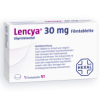
Orlistat dosage: How much should you take?

- The standard prescription, OTC orlistat doses and how to take them
- The maximum daily dose and why exceeding it is not beneficial
- Whether once-daily dosing is effective
- What to do if you miss a dose
- Important considerations for specific patient groups
- What are the available orlistat doses?
- How do you take prescription orlistat (120mg)?
- How do you take OTC orlistat (60mg / Alli)?
- Can I take orlistat once a day?
- What should you do if you miss a dose?
- Can you take more than the prescribed dose?
- Are there dosage considerations for specific patient groups?
- Should you take vitamins alongside orlistat?
- Final thoughts
What are the available orlistat doses?
| Prescription orlistat (Xenical/generic) | OTC orlistat (Alli) | |
|---|---|---|
| Dose per capsule | 120 mg | 60 mg |
| When to take | With each main fat-containing meal | With each main fat-containing meal |
| Timing | During the meal or up to one hour after | During the meal or up to one hour after |
| Maximum frequency | Three times daily | Three times daily |
| Maximum daily dose | 360 mg | 180 mg |
Source: Xenical (orlistat 120 mg) Summary of Product Characteristics, medicines.org.uk.
How do you take prescription orlistat (120mg)?
The standard prescription dose is one 120 mg capsule taken three times daily, once with each main meal that contains fat. The capsule should be taken during the meal or within one hour of finishing it. If a meal is skipped, or if the meal contains no fat, the dose should also be skipped.
Orlistat works by inhibiting the enzyme that breaks down dietary fat in the gut. If there is no fat present in a meal, the medication has nothing to act on and taking a dose serves no purpose. For a full explanation of how orlistat works, see our how orlistat works guide.
Good to know
The fat content of your meals directly affects both the effectiveness of orlistat and your risk of gastrointestinal side effects. Meals containing more than 30% of calories from fat significantly increase the risk of oily stools, faecal urgency, and other GI effects. Distributing fat intake evenly across three meals reduces this risk.
How do you take OTC orlistat (60mg / Alli)?
The OTC dose is one 60 mg capsule, taken on the same timing principle as the prescription version: with each main fat-containing meal, during the meal or up to one hour after. The maximum OTC daily dose is 180 mg (three 60 mg capsules).
The mechanism is identical to the prescription dose; the 60 mg version simply blocks a smaller proportion of dietary fat. For more information on the differences between OTC and prescription orlistat, see our orlistat over the counter guide.
Can I take orlistat once a day?
Orlistat is designed to be taken with each fat-containing meal, up to three times daily. If you eat three fat-containing meals a day and only take one capsule, the fat in the other two meals is fully absorbed, significantly limiting the medication's overall effect.
If you consistently eat only one fat-containing meal per day, one capsule daily is appropriate for that meal. If you are unsure whether your dosing schedule matches your eating pattern, discuss this with your prescriber.
What should you do if you miss a dose?
If you forget to take orlistat with a meal, the guidance from the Xenical Summary of Product Characteristics is straightforward:
- If it has been less than one hour since you finished eating, take the capsule as soon as you remember
- If it has been more than one hour since the meal, skip that dose entirely
- If the meal contained no fat, skip the dose for that meal
- Never double up on doses to compensate for a missed one
Can you take more than the prescribed dose?
No. Taking more than the recommended dose does not increase the amount of fat blocked or improve weight loss outcomes. The enzyme inhibition that orlistat produces is effectively maxed out at the recommended dose per meal. Exceeding the prescribed dose increases the risk and severity of gastrointestinal side effects without any clinical benefit.
Warning!
Never exceed the maximum daily dose of 360 mg for prescription orlistat or 180 mg for Alli. Do not adjust your dose without speaking to your prescriber first. Always follow your prescriber's instructions.
Are there dosage considerations for specific patient groups?
Elderly patients
No specific dose adjustment is required based on age alone. However, older patients are more likely to be taking medications that interact with orlistat, including anticoagulants such as warfarin. A medication review with your prescriber is important before starting.
Patients with renal impairment
Orlistat is minimally absorbed into the bloodstream, but it can increase urinary oxalate levels. Patients with a history of kidney stones or hyperoxaluria should discuss this with their prescriber before starting treatment.
Patients with hepatic impairment
Rare cases of severe liver injury have been reported with orlistat, though a causal link has not been established. Patients with pre-existing liver conditions should seek prescriber guidance before starting.
Good to know
If any of the above apply to you, always disclose them during your prescriber consultation. Your prescriber will weigh the benefits and risks based on your individual health profile.
Should you take vitamins alongside orlistat?
Yes. Because orlistat reduces fat absorption, it also reduces the absorption of fat-soluble vitamins A, D, E, and K. The Xenical Summary of Product Characteristics recommends that patients taking orlistat also take a daily multivitamin supplement containing these vitamins.
The supplement should be taken at least two hours after an orlistat dose, or alternatively at bedtime, to ensure the vitamins are absorbed independently of the medication's fat-blocking effect.
Final thoughts
Orlistat dosing is straightforward once the principle is understood: take it with fat-containing meals, up to three times daily, and skip it when meals are fat-free or missed. The most common dosing error is inconsistency, either taking it less frequently than needed or with meals that do not contain fat. Following the timing guidance and maintaining a low-fat diet are the two factors that most influence both effectiveness and tolerability.
DoktorABC connects UK patients with licensed prescribers who can assess suitability for orlistat and provide ongoing clinical guidance throughout treatment.
FAQ
What is the standard orlistat dosage?
One 120 mg capsule three times daily for prescription orlistat, taken with each main fat-containing meal during or up to one hour after eating. The OTC dose (Alli) is 60 mg on the same timing principle.
What is the maximum orlistat dose per day?
360 mg per day for prescription orlistat (three 120 mg capsules). 180 mg per day for OTC Alli (three 60 mg capsules). These limits must not be exceeded.
Can I take orlistat once a day?
If you eat only one fat-containing meal per day, one capsule is appropriate for that meal. Taking it once daily when eating three fat-containing meals significantly reduces its effectiveness.
What should I do if I miss an orlistat dose?
If it has been less than one hour since the meal, take the capsule. If more than one hour has passed, or the meal was fat-free, skip that dose. Do not double up.
Should I take vitamins with orlistat?
Yes. Orlistat reduces absorption of fat-soluble vitamins A, D, E, and K. A daily multivitamin should be taken at least two hours after an orlistat dose or at bedtime.
Can taking more orlistat improve weight loss?
No. Exceeding the prescribed dose does not increase fat blocking or weight loss and significantly increases the risk of gastrointestinal side effects.
The DoktorABC medical advisory board

Dr. Roland Ruiken
Medical advisor, Norway

Dr. Viktor Simunovic
Medical advisor, Croatia