















What do GLP-1 reviews actually tell you?

- What people commonly value and find difficult, according to reviews
- What "GLP-1" covers, and how injections, tablets and dual-mechanism medicines differ
- What the pivotal UK-relevant trials show, kept separate from anecdotal claims
- The patient-experience themes that come up again and again
- Side effects and red flags to know about
- How UK access works, and how to judge an online review critically
- What do people commonly say in GLP-1 reviews?
- What does "GLP-1" actually cover?
- What does the clinical evidence show?
- What themes come up in patient experiences?
- Weighing benefits and limitations
- What side effects and red flags should you know about?
- How does UK access work?
- How should you judge online GLP-1 reviews?
- Final thoughts
What do people commonly say in GLP-1 reviews?
The same themes recur across most patient reviews. On the positive side, people describe feeling less hungry, fuller on smaller meals, and losing a meaningful amount of weight. On the negative side, gastrointestinal effects, dose titration, and the routine of a weekly injection or strict tablet schedule come up often, along with cost and access. Every experience shared online is one person's account, not a prediction for anyone else.
What does "GLP-1" actually cover?
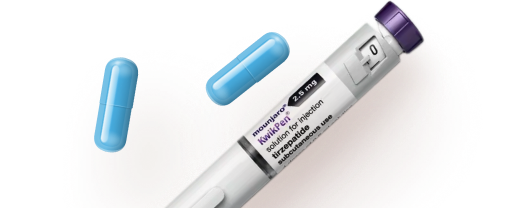
GLP-1 receptor agonists are a class of medicines that mimic a gut hormone involved in appetite and blood sugar regulation. The class includes semaglutide, sold as Wegovy for weight management and Ozempic for type 2 diabetes, and liraglutide, sold as Saxenda for weight management and Victoza for diabetes. Tirzepatide, sold as Mounjaro, works a little differently: it is a dual GIP and GLP-1 receptor agonist, acting on two hormone pathways rather than one, which is part of why its trial results look different.
Format varies too. Wegovy and Mounjaro are both given as weekly injections. An oral semaglutide tablet, the Wegovy Pill, has now also received MHRA approval. Reviews often blur one distinction worth being clear on: a diabetes licence and a weight-management licence are not the same thing. Ozempic is licensed for type 2 diabetes rather than weight loss, and Wegovy is the licensed option for weight management.
Good to know
GLP-1 patches and "oral liquid" drops sold online are not MHRA-licensed weight-loss treatments. Semaglutide and tirzepatide are peptides, which are not absorbed effectively through the skin or as unregulated drops. Whatever a review claims, these are not equivalent to a prescribed GLP-1 medicine.
What does the clinical evidence show?
Before looking at anecdotal reviews, it helps to see what the pivotal trials underpinning each licence actually found.
| Trial | Medicine | Population | Duration | Lifestyle support | Average weight change | Discontinuation | Key limitation |
|---|---|---|---|---|---|---|---|
| STEP 1 | Semaglutide 2.4mg injection | Obesity, or overweight with a related condition | 68 weeks | Yes | 14.9% | Approx. 7% | Trial averages only |
| SURMOUNT-1 | Tirzepatide, highest dose | Obesity or overweight | 72 weeks | Yes | Up to 20.9% | Dose-dependent | Not tested against semaglutide directly |
| SCALE | Liraglutide 3.0mg injection | Obesity or prediabetes | 56 weeks | Yes | Around 8% | Higher than newer agents | Daily injection; shorter trial |
| OASIS 4 | Oral semaglutide 25mg tablet | Overweight or obesity | 64 weeks | Yes | Approx. 13.6% | Comparable to injections | Different population from STEP 1 |
These trials were run independently, with different populations and methods, so the percentages should never be read as a head-to-head comparison.
What themes come up in patient experiences?
Beyond the headline figures, patient accounts circle back to similar experiences. Many describe a quieter relationship with food, sometimes called reduced food noise, feeling satisfied on smaller portions, and changes to social eating. Energy levels are described inconsistently: some feel more energetic as weight comes down, while others notice fatigue during early titration. Injection anxiety, tablet timing, and staying consistent through dose increases are common challenges, as is reaching a plateau or noticing appetite return after stopping. These are patterns drawn from personal accounts, not standard outcomes.
Weighing benefits and limitations
There is no single "best" GLP-1 medicine. Any review that suggests that there is, is oversimplifying a decision that depends on individual health history and goals.
| Decision factor | What to consider |
|---|---|
| Effectiveness | Varies by medicine, dose and individual; see trial table above |
| Tolerability | Gastrointestinal effects are most common, especially during titration |
| Dosing frequency | Weekly injection or daily tablet, depending on the medicine |
| Monitoring | Regular clinical review needed throughout treatment |
| Contraindications | Pregnancy, certain thyroid conditions, gallbladder disease |
| Supply and cost | Private cost varies; NHS access depends on eligibility criteria |
What side effects and red flags should you know about?
The most commonly reported side effects are gastrointestinal: nausea, vomiting, diarrhoea and constipation, particularly during dose increases. Dehydration can develop if vomiting or diarrhoea becomes significant, and gallbladder problems have also been reported with this medicine class.
Warning!
Seek urgent medical assessment for severe or persistent abdominal pain, which can be a sign of pancreatitis. If you are pregnant, planning a pregnancy, or have surgery coming up, tell your prescriber, as current MHRA advice covers stopping treatment beforehand and using effective contraception while taking it.
How does UK access work?
It helps to separate three things that often get run together: whether a medicine is licensed, whether it meets NHS commissioning criteria, and whether it is available privately. A medicine can hold an MHRA licence for weight management while NHS access remains restricted to patients who meet NICE criteria, such as NICE TA875 for semaglutide or NICE TA1026 for tirzepatide. Accessing treatment through a regulated online clinic involves a proper clinical assessment, a prescription where it is clinically appropriate, dispensing through a GPhC-registered pharmacy, and ongoing monitoring throughout treatment. Any suspected side effects or counterfeit products can be reported through the MHRA Yellow Card scheme.
How should you judge online GLP-1 reviews?
Online reviews carry a built-in bias: people with a strongly positive or negative experience are most likely to post, while the quieter middle ground goes unrecorded. Undisclosed sponsorship, mixed-up doses, edited before-and-after photos, and short follow-up with no baseline information can make a result look more dramatic than it is. Reviews of GLP-1 "patches" or "oral liquid" products deserve particular scepticism, since no such products hold MHRA licensing. Use reviews as a starting point for questions for a consultation, not for self-diagnosis or self-prescribing.
Final thoughts
GLP-1 reviews can be a useful window into daily life on treatment, but they were never designed to replace clinical trial evidence or an individual assessment. Reading the evidence alongside common patient themes, and knowing what to watch for in a review, puts patients in a stronger position with a prescriber. DoktorABC connects UK patients with licensed prescribers who can discuss GLP-1 options and provide ongoing clinical support.
FAQ
Which GLP-1 has the best reviews?
No medicine has universally "the best" reviews. Experience varies by individual and dose, so reviews are not a substitute for trial evidence or a clinical assessment.
How much weight do people lose?
Trial averages range from around 8% to over 20% of body weight, depending on the medicine and dose. Individual results vary, and separate trials should never be compared head-to-head.
Do side effects improve?
Gastrointestinal side effects are usually most noticeable during titration and tend to ease as the body adjusts, though this varies between individuals.
Are the patches or oral liquid drops reviewed online genuine?
No GLP-1 patches or unregulated liquid products currently hold MHRA licensing for weight management, so reviews of these should be treated with real caution.
What happens if treatment stops?
Appetite and weight commonly return gradually after stopping, in both trial extension data and patient accounts. Ongoing management is best discussed with a prescriber.
The DoktorABC medical advisory board

Dr. Roland Ruiken
Medical advisor, Norway

Dr. Viktor Simunovic
Medical advisor, Croatia