













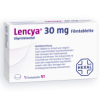
A complete guide to the mini pill

- How the mini pill works
- Which brands are available in the UK including their active ingredients
- Does it stop periods?
- How long it takes to work
- Who is it suitable for?
- How effective is it in practice
- How to access it in the UK
- How the mini pill works
- Mini pill brands available in the UK
- Does the mini pill stop periods?
- How long does the mini pill take to work?
- Mini pill vs combined pill: a quick comparison
- Who is the mini pill suitable for?
- How effective is the mini pill?
- Side effects overview
- How to get the mini pill in the UK
- Final thoughts
How the mini pill works
The mini pill contains only progestogen, with no oestrogen component. It works in two ways, by thickening cervical mucus, and suppressing ovulation, though the extent of each depends on the specific progestogen and dose.
Thickening cervical mucus: Progestogen causes the mucus at the cervix to thicken, making it significantly harder for sperm to travel through the cervix and reach an egg. This is the primary mechanism for most mini pills.
Suppressing ovulation: Desogestrel-containing mini pills (such as Cerazette and Cerelle) suppress ovulation in most cycles, providing an additional layer of protection. Older progestogen-only pills containing norethisterone or levonorgestrel do not reliably suppress ovulation and rely more heavily on the cervical mucus effect.
This distinction between desogestrel-containing and older mini pills is clinically important, particularly in relation to the timing window for taking the pill and overall efficacy.
Mini pill brands available in the UK
The following progestogen-only pills are available on prescription in the UK. A prescriber will recommend the most appropriate option based on your individual health history and circumstances.
| Brand | Active ingredient | Dose |
|---|---|---|
| Cerazette | Desogestrel | 75 micrograms |
| Cerelle | Desogestrel | 75 micrograms |
| Feanolla | Desogestrel | 75 micrograms |
| Zelleta | Desogestrel | 75 micrograms |
| Noriday | Norethisterone | 350 micrograms |
| Norgeston | Levonorgestrel | 30 micrograms |
Good to know
Cerazette, Cerelle, Feanolla, and Zelleta all contain the same active ingredient (desogestrel) at the same dose and are clinically equivalent. The choice between them is largely one of availability and prescriber preference rather than clinical difference.
Does the mini pill stop periods?
The mini pill does not have a predictable effect on periods in the way the combined pill does and changes in periods vary among individuals. Possible outcomes include:
- Lighter or absent periods: Many women find their periods become lighter or stop altogether, which many consider a positive effect.
- Irregular spotting or bleeding: This is the most commonly reported pattern, particularly in the first few months of use. Bleeding may be unpredictable in timing, duration, and heaviness.
- Periods continuing as normal: Some women notice little change in their menstrual pattern.
These variations occur because the mini pill does not reliably suppress ovulation in the same way the combined pill does, and the progestogen effect on the uterine lining differs between individuals.
Good to know
Irregular bleeding is the most common reason women stop taking the mini pill. For most women it improves after the first three months, but if it persists or is significantly disruptive, a different formulation or contraceptive method may be more suitable. Discuss this with your prescriber before stopping.
How long does the mini pill take to work?
If you start the progestogen-only pill on the first day of your period, you are protected against pregnancy straight away. If you start on any other day of your cycle, you will need to use additional contraception such as condoms for the first 48 hours.
The 48-hour rule for additional contraception applies to desogestrel-containing mini pills. For older progestogen-only pills containing norethisterone or levonorgestrel, the window is also 48 hours from the start of a new pack if not started on day one of the period.
The timing window for taking the mini pill
For desogestrel-containing mini pills (Cerazette, Cerelle, Feanolla, Zelleta), a pill is considered missed if it is taken more than 12 hours late. For older norethisterone and levonorgestrel pills (Noriday, Norgeston), the window is three hours.
Important !
The timing window for taking the mini pill differs significantly between desogestrel-containing and older formulations. If you are prescribed a desogestrel mini pill, you have a 12-hour window; if you are on an older formulation, the window is only three hours. Always check your patient information leaflet and discuss the timing requirements with your prescriber when starting.
Mini pill vs combined pill: a quick comparison
Choosing between the mini pill and the combined pill often comes down to a few key factors: whether oestrogen is suitable for you, how you feel about changes to your bleeding pattern, and how flexible you need your daily timing to be. The table below sets out the main differences side by side.
| Feature | Mini pill | Combined pill |
|---|---|---|
| Hormones | Progestogen only | Oestrogen and progestogen |
| Contains oestrogen | No | Yes |
| Suitable for smokers over 35 | Yes | No |
| Suitable with migraine with aura | Yes | No |
| Suitable while breastfeeding | Yes | Not recommended under 6 weeks postpartum |
| Effectiveness (perfect use) | Over 99% | Over 99% |
| Effect on periods | Variable; often irregular | Usually regular withdrawal bleed |
| Daily timing flexibility | 12-hour window (desogestrel); 3-hour window (older formulations) | Same time each day; more flexible |
| Suppresses ovulation | Desogestrel formulations only | Yes, reliably |
| VTE risk | No increased risk | Small increased risk |
Who is the mini pill suitable for?
The mini pill is suitable for a broad range of women and is particularly useful for those who cannot take oestrogen-containing contraception.
The mini pill may be particularly suitable if you:
- Smoke and are aged 35 or over
- Experience migraine with aura, which is a contraindication to the combined pill
- Are breastfeeding (progestogen-only contraception is considered safe during breastfeeding)
- Have a history of high blood pressure or cardiovascular conditions that make oestrogen unsuitable
- Have had a previous venous thromboembolism
- Have certain liver conditions that are aggravated by oestrogen
- Are in the postpartum period and wish to start contraception before six weeks
The mini pill may be less suitable if you:
- Have a history of certain types of breast cancer
- Are taking medicines that affect liver enzymes, such as some anticonvulsants, which can reduce the effectiveness of the mini pill
- Find irregular bleeding patterns difficult to manage practically or emotionally
A medical assessment is required before starting the mini pill, and your prescriber will review your full health history before recommending it.
How effective is the mini pill?
With perfect use, the progestogen-only pill is over 99% effective, meaning fewer than 1 in 100 women will become pregnant over one year. With typical use, around 9 in 100 women may become pregnant over one year.
The difference between perfect and typical use reflects the importance of taking the pill at a consistent time each day within the required window. Missing a pill or taking it outside the timing window reduces effectiveness and requires additional contraception to be used.
Side effects overview
The most commonly reported side effects of the mini pill relate to changes in bleeding patterns, as described above. Other side effects can include mood changes, headaches, breast tenderness, reduced libido, and acne, though these vary between individuals and formulations.
For a full breakdown of mini pill side effects, including what is common, what is rare, and when to seek medical advice, see our mini pill side effects guide.
How to get the mini pill in the UK
The mini pill is available through several routes in the UK, both on the NHS and privately. As with the combined pill, a medical assessment is required before a prescription can be issued, as suitability varies between individuals.
Via your GP: GPs can prescribe the mini pill on the NHS following a consultation. This is free of charge for eligible patients in England, and free in Scotland, Wales, and Northern Ireland.
Via a sexual health clinic: Sexual health and contraception clinics provide free contraceptive services including mini pill prescriptions without the need for a GP referral.
Via a pharmacist: Some pharmacies in England offer progestogen-only pill consultations and prescriptions under the NHS Pharmacy Contraception Service.
Via a regulated online clinic: Private online clinics connect you with UK-registered prescribers who can assess your suitability and issue a private prescription.
Important !
The mini pill is a prescription-only medicine in the UK. Always ensure any online provider is registered with the GPhC at gphc.org.uk before proceeding.
Final thoughts
The mini pill is a highly effective, well-tolerated contraceptive option for most women, and is particularly valuable for those who cannot take oestrogen-containing contraception. The most important practical considerations are the timing window for taking the pill and the variable effect on bleeding patterns, both of which are worth discussing with a prescriber before starting.
FAQ
What is the mini pill?
The mini pill is a progestogen-only contraceptive pill, containing no oestrogen. It works primarily by thickening cervical mucus; desogestrel-containing formulations also suppress ovulation in most cycles.
How effective is the mini pill?
With perfect use, the mini pill is over 99% effective. With typical use, around 9 in 100 women may become pregnant in a year. Consistent, timely pill-taking is essential for maximum effectiveness.
Does the mini pill stop periods?
It varies between individuals. Some women find periods become lighter or stop altogether; others experience irregular spotting or little change. Irregular bleeding is most common in the first three months and often improves with continued use.
How long does the mini pill take to work?
If started on the first day of your period, it is effective immediately. If started at any other time, additional contraception should be used for 48 hours.
Can I take the mini pill if I smoke?
Yes. Unlike the combined pill, the mini pill does not carry an increased risk of blood clots and is suitable for smokers of all ages, including women over 35.
Can I take the mini pill while breastfeeding?
Yes. The progestogen-only pill is considered safe during breastfeeding and is often recommended as a suitable contraceptive option in the postpartum period.
What is the difference between Cerazette and Cerelle?
Both contain desogestrel 75 micrograms and are clinically equivalent. The difference is in the manufacturer and packaging rather than the medicine itself.
What should I do if I miss a mini pill?
For desogestrel-containing pills, a pill is missed if taken more than 12 hours late. For older formulations, the window is three hours. If a pill is missed, use additional contraception for 48 hours and follow the instructions in your patient information leaflet. See our missed pill guide for full guidance.
The DoktorABC medical advisory board

Dr. Roland Ruiken
Medical advisor, Norway

Dr. Viktor Simunovic
Medical advisor, Croatia