










What is desogestrel?
Desogestrel is a progestogen-only pill (POP), sometimes called the mini-pill. Each tablet contains 75 micrograms of desogestrel and is taken every day without a break. It does not contain oestrogen, which makes it a suitable option for women who cannot use combined hormonal contraceptives.
It is available in the UK under several brand names, including Cerelle, Cerazette, Zelleta, and Feanolla. All contain the same active ingredient at the same dose and are considered clinically equivalent.
How does desogestrel work?
Most older progestogen-only pills work mainly by thickening the cervical mucus, making it harder for sperm to reach the egg. Desogestrel goes a step further: in most cases, it also prevents ovulation entirely. This is a key difference from older POPs and is the main reason desogestrel offers over 99% protection against pregnancy with perfect use.
It also thickens cervical mucus and alters the lining of the uterus, providing additional contraceptive effects.
Who is desogestrel suitable for?
Desogestrel is a good option for women who cannot or prefer not to use combined hormonal contraceptives. Because it does not contain oestrogen, it is suitable for:
- Women who smoke and are over 35
- Women who experience migraines with aura
- Women who are breastfeeding
- Women with certain cardiovascular risk factors
You should not take desogestrel if you:
- Are allergic to any of its ingredients
- Have or have had a blood clot (thrombosis)
- Have severe liver disease or liver cancer
- Have or are suspected of having a sex-steroid-sensitive cancer, such as certain types of breast cancer
- Have unexplained vaginal bleeding
Speak to your UK-registered prescriber before starting desogestrel if you have a history of breast cancer, diabetes, epilepsy, high blood pressure, or if you have ever had thrombosis.
How to take desogestrel
Take one tablet daily at the same time each day, swallowed whole with water. Each pack contains 28 tablets. When one pack is finished, start the next one the following day with no break and no need to wait for a period.
For immediate contraceptive protection, start desogestrel on the first day of your period. If you start on days 2 to 5, use an additional barrier method such as a condom for the first 7 days.
If switching from a combined pill, start desogestrel the day after your last active tablet. If switching from another progestogen-only pill, you can switch on any day without needing extra precautions.
Desogestrel has a 12-hour window, which is more forgiving than older progestogen-only pills that require a 3-hour window. If you take your tablet within 12 hours of your usual time, you remain protected.
Missed pill guidance
If you are less than 12 hours late taking your tablet, take it as soon as you remember and continue as normal. You are still protected.
If you are more than 12 hours late, take the missed tablet as soon as you remember and continue taking the rest of the pack at the usual time. Use an additional barrier method for the next 7 days. If you missed a tablet in the first week and had unprotected sex in the week before missing it, contact your UK-registered prescriber for advice.
If you vomit within 3 to 4 hours of taking your tablet, or have severe diarrhoea, treat this as a missed pill and follow the guidance above.
Side effects
Like all medicines, desogestrel can cause side effects, although not everyone experiences them.
Common side effects (may affect up to 1 in 10 people):
- Irregular or absent periods
- Mood changes or low mood
- Reduced sex drive
- Headache
- Nausea
- Acne
- Breast pain
- Weight increase
Uncommon side effects (may affect up to 1 in 100 people):
- Vaginal infection
- Vomiting or hair loss
- Ovarian cysts
- Tiredness or painful periods
Ovarian cysts are listed as an uncommon side effect. In most cases they are benign and resolve on their own without treatment, but speak to your UK-registered prescriber if you experience persistent pelvic pain.
Unlike combined hormonal contraceptives, desogestrel is not associated with a significant increase in VTE (blood clot) risk. The patient information leaflet (PIL) notes that any risk with progestogen-only pills is believed to be lower than with oestrogen-containing pills.
Seek medical attention immediately if you experience symptoms of a blood clot, a severe stomach ache, sudden pain in the lower abdomen, or a lump in the breast.
Effect on periods
Changes to your bleeding pattern are very common on desogestrel and can take a few months to settle. Your periods may become lighter, more irregular, or stop altogether. All of these are recognised effects of the pill and are not a sign that something is wrong.
Absent periods, known as amenorrhoea, are a common and recognised effect of desogestrel. However, if you have had unprotected sex and your periods have not come as expected, it is worth doing a pregnancy test to rule out pregnancy before continuing with the next pack.
If irregular or heavy bleeding continues beyond the first few months, speak to your UK-registered prescriber.
Desogestrel and branded versions
Cerelle, Cerazette, Zelleta, and Feanolla are all brand names for the same medicine: desogestrel 75 micrograms. They contain the same active ingredient at the same dose and are considered bioequivalent, meaning they work in the same way and to the same standard.
Some women are switched to a generic version by their GP, usually for reasons related to prescribing cost rather than clinical preference. There is no clinical reason to favour one brand over another, and switching between them does not require any additional contraceptive precautions.
Drug interactions
Some medicines can reduce the effectiveness of desogestrel by affecting how it is absorbed or processed in the body. These include:
- Enzyme-inducing medicines used for epilepsy, such as carbamazepine, phenytoin, and phenobarbital
- Tuberculosis treatments, including rifampicin and rifabutin
- Certain HIV and hepatitis C medications
- St John's Wort, a herbal remedy sometimes used for low mood
If you are taking any of these, speak to your UK-registered prescriber. You may need to use additional contraception during treatment and for up to 28 days afterwards.
Always tell your prescriber about all medicines and supplements you are taking before starting desogestrel.
How to get desogestrel through DoktorABC
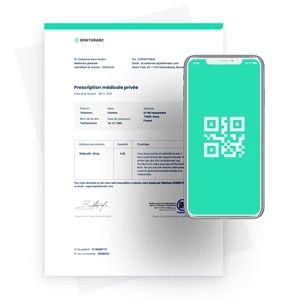
To access desogestrel through DoktorABC, complete a short online consultation with a UK-registered prescriber who will assess your suitability for treatment. Repeat prescriptions are also available through the platform, so you can manage your contraception online without repeated clinic visits.
Important information: DoktorABC UK is a digital health platform that connects patients with independent, UK-registered prescribers. DoktorABC UK does not itself provide medical care, issue prescriptions or dispense medicines. All clinical decisions are made by the UK-registered prescriber following an individual medical assessment.
The Patient Information Leaflet for desogestrel is available via the Electronic Medicines Compendium (eMC):
The PIL in your medicine pack may differ from the version on this website, as it may have been updated since your medicine was packaged or the medicine may be from another brand.