









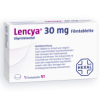




- Treatment for vaginal thrush with fluconazole 150 mg
- Access fluconazole 150 mg following an online medical consultation
- What is fluconazole 150 mg?
- When to get assessed for thrush symptoms before starting treatment
- How fluconazole works
- Who should not use fluconazole 150 mg without medical assessment
- Drug interactions
- Side effects
- How DoktorABC works
- Fluconazole 150 mg active substance and excipients
- Fluconazole 150 mg patient information leaflet
Treatment for vaginal thrush with fluconazole 150 mg
Fluconazole 150 mg is a single-dose oral antifungal capsule licensed for the treatment of vaginal candidiasis (vaginal thrush) and candidal balanitis associated with vaginal candidiasis in adults aged 16 to 60 years. It is available as a generic medicine and under the brand name Diflucan (Pfizer). One capsule is swallowed whole and provides a complete course of treatment for the licensed indication.
Access fluconazole 150 mg following an online medical consultation
Start the online consultation and complete the medical questionnaire. A UK-registered prescriber will review your answers and, where appropriate, issue a prescription for fluconazole 150 mg.
Important information
DoktorABC UK is a digital health platform that connects patients with independent, UK-registered prescribers. DoktorABC UK does not itself provide medical care, issue prescriptions, or dispense medicines. All clinical decisions are made by the UK-registered prescriber following an individual medical assessment.
What is fluconazole 150 mg?
Fluconazole is an antifungal medicine belonging to the azole class. The 150 mg oral capsule is licensed in the UK for two specific indications.
Vaginal candidiasis, acute or recurrent; or candidal balanitis associated with vaginal candidiasis. In adults aged 16 to 60 years, the licensed dose is a single 150 mg oral capsule.
Fluconazole 150 mg is not licensed for other fungal infections at this dose. The doses used for conditions such as oral thrush, systemic fungal infections, or fungal nail infections are different and are not covered by this product page. Always follow the specific instructions provided by your prescriber.
Fluconazole 150 mg capsules are available as a generic medicine from several manufacturers and as Diflucan 150 mg hard capsules (Pfizer). Generic products contain the same active ingredient at the same dose and are licensed for the same indication. Each pack typically contains one capsule.
This product contains lactose. If you have been told by a doctor that you have an intolerance to some sugars, speak to your doctor before taking this medicine.
When to get assessed for thrush symptoms before starting treatment
Vaginal thrush typically causes itching, soreness, redness, and a white, thick, usually odourless discharge. In men, the equivalent condition, candidal balanitis, causes similar symptoms affecting the head of the penis, including redness, itching, and irritation.
These symptoms can overlap with bacterial vaginosis, sexually transmitted infections, and other conditions. Recognising typical thrush symptoms does not confirm the diagnosis, particularly for a first episode or when symptoms are atypical.
Important: Seek assessment from your GP or a sexual health clinic before using fluconazole if this is the first time you have had these symptoms:
- You have had more than two episodes in the last six months
- You or your partner have ever had a sexually transmitted infection
- You are under 16 or over 60
- You are pregnant, trying to conceive, or breastfeeding
- You have discharge with an unusual or unpleasant smell
- You have vaginal bleeding outside of your normal period
- You have sores, ulcers, or blisters
- You have fever, pelvic pain, or pain upon urination.
Clinical examination and testing can identify the cause more reliably than treating on the basis of symptoms alone in these situations.
How fluconazole works
Fluconazole works by inhibiting an enzyme called lanosterol 14-alpha-demethylase, which the Candida fungus needs to produce ergosterol, a key component of its cell membrane. By blocking this process, fluconazole causes the fungal cell membrane to become defective, preventing the fungus from reproducing and ultimately clearing the infection.
Unlike topical antifungal preparations, fluconazole is absorbed into the bloodstream after oral administration and reaches the site of infection systemically. This means a single oral dose can treat both internal vaginal infection and associated external symptoms from within.
The long plasma elimination half-life of fluconazole, approximately 30 hours, provides the basis for single dose therapy for vaginal candidiasis.
Most people find symptoms begin to improve within a day or two of taking the capsule. Complete resolution of symptoms may take a few days. If symptoms have not improved within seven days, or if they worsen at any point, contact your GP or prescriber.
How to take it:
- Swallow the capsule whole with water
- It can be taken with or without food
- One capsule is the complete course for the licensed indication
- Do not take a second capsule without clinical guidance
Who should not use fluconazole 150 mg without medical assessment
Fluconazole 150 mg is not appropriate for everyone. The following circumstances require medical assessment before use.
Pregnancy and trying to conceive
Fluconazole must not be used during pregnancy. There is evidence of an association between fluconazole use in pregnancy and congenital abnormalities. Women who could become pregnant should use effective contraception during treatment. Do not take this product if you are pregnant or trying for a baby.
Breastfeeding
Fluconazole was detected in breast milk at an average concentration of approximately 98% of those in maternal plasma following a single 150 mg dose. You should not breastfeed if you are taking a repeated dose of fluconazole 150 mg. For a single dose, discuss with your prescriber or pharmacist whether breastfeeding should be temporarily paused and for how long.
Age
Fluconazole 150 mg is for adults aged 16 to 60 years only. It is not recommended in patients aged over 60 years. Use in those under 16 or over 60 requires medical assessment.
Liver or kidney disease
Fluconazole is processed by the liver and excreted by the kidneys. People with liver or kidney disease may require dose adjustment or an alternative treatment. Always inform your prescriber of any liver or kidney conditions.
Heart rhythm conditions and electrolyte problems
Fluconazole can affect heart rhythm. People with known QT prolongation, electrolyte disturbances (such as low potassium or magnesium), or other heart conditions should seek medical assessment before use.
Reduced immunity
People who are immunocompromised, including those on immunosuppressant medicines or living with HIV, should seek medical assessment rather than self-treating.
Previous severe drug reaction
If you have previously experienced a severe skin reaction to any medicine, including reactions such as Stevens-Johnson syndrome or toxic epidermal necrolysis, seek medical advice before taking fluconazole.
Recurrent or first symptoms
As described above, a first episode or recurrent thrush warrants clinical assessment.
Drug interactions
Fluconazole interacts with a number of medicines, some of which are contraindicated and others that require close monitoring. This section highlights the most clinically important interactions based on the current UK SmPC. It is not an exhaustive list, and a prescriber or pharmacist should always review your full medication list before fluconazole is prescribed.
Contraindicated combinations
Co-administration of medicines known to prolong the QT interval and which are metabolised via CYP3A4, such as cisapride, astemizole, pimozide, quinidine, and erythromycin, are contraindicated in patients taking fluconazole.
Clinically important interactions to discuss with your prescriber or pharmacist:
- Anticoagulants (e.g. warfarin): Fluconazole significantly increases the anticoagulant effect of warfarin and similar medicines, increasing bleeding risk. Close monitoring of INR is required.
- Antidiabetic medicines (e.g. glibenclamide, glipizide, tolbutamide): Fluconazole may increase blood levels of sulphonylurea antidiabetic medicines, increasing the risk of low blood sugar.
- Antiepileptic medicines (e.g. phenytoin): Fluconazole may increase phenytoin levels in the blood, increasing the risk of toxicity.
- Ciclosporin and tacrolimus: Fluconazole may significantly increase levels of these immunosuppressant medicines, requiring monitoring and possible dose adjustment.
- Statins metabolised by CYP3A4 (e.g. simvastatin, atorvastatin): Fluconazole may increase statin levels, raising the risk of muscle-related side effects.
- Medicines affecting heart rhythm (QT-prolonging drugs): Fluconazole itself can prolong the QT interval and should be used with caution alongside other medicines with this effect.
Important: This is not a complete list of all interactions. Always inform your prescriber and pharmacist of every medicine, supplement, and herbal remedy you are taking before being prescribed fluconazole.
Side effects
As with all medicines, fluconazole 150 mg can cause side effects, although not everyone will experience them. The following is based on the current UK patient information leaflet (fluconazole 150 mg capsules, last revised January 2024, medicines.org.uk).
Common side effects (may affect up to 1 in 10 people):
- Headache
- Nausea, abdominal pain, diarrhoea, or indigestion
- Skin rash
Uncommon side effects (may affect up to 1 in 100 people):
- Dizziness
- Vomiting
- Taste disturbance
- Elevated liver enzymes
Rare side effects (may affect up to 1 in 1,000 people):
- Seizures
- Hair loss
- High blood cholesterol or triglycerides
Urgent symptoms requiring immediate medical attention:
Stop taking fluconazole and seek emergency help immediately if you experience any of the following.
- Signs of a severe allergic reaction: swelling of the face, lips, tongue or throat, difficulty breathing or swallowing, severe rash or hives
- Severe skin reactions: blistering, peeling, or widespread redness of the skin (which may indicate Stevens-Johnson syndrome or toxic epidermal necrolysis)
- Signs of liver problems: yellowing of the skin or eyes (jaundice), dark urine, persistent nausea or vomiting, upper abdominal pain, or unusual fatigue
- Hypersensitivity reaction with skin rash, fever, swollen glands, increase in a type of white blood cell and inflammation of internal organs (liver, lungs, heart, kidneys and large intestine), which may indicate Drug Reaction with Eosinophilia and Systemic Symptoms (DRESS)
Important: Fluconazole can occasionally cause dizziness or seizures. When driving vehicles or using machines, it should be taken into account that occasionally dizziness or fits may occur.
Report any suspected side effects to the MHRA via the Yellow Card scheme.
How DoktorABC works
DoktorABC UK is a digital health platform that connects patients with independent, UK-registered healthcare professionals through a secure online process.
- Complete a short medical questionnaire covering your symptoms, medical history, and any relevant medicines.
- An independent UK-registered prescriber reviews your information and determines whether fluconazole 150 mg is clinically appropriate for you.
- If treatment is considered suitable, a prescription is approved by the UK-registered prescriber in accordance with UK regulations.
- Your medication is dispensed by a GPhC-registered pharmacy and delivered to your door in discreet packaging.
DoktorABC UK does not itself provide medical care, issue prescriptions, or dispense medicines. All clinical decisions are made by the independent prescribing healthcare professional following an individual assessment.
Fluconazole 150 mg active substance and excipients
Active substance:
Fluconazole 150 mg per capsule.
Other ingredients vary by manufacturer. Common excipients in generic formulations include lactose, maize starch, colloidal silicon dioxide, magnesium stearate, and sodium lauryl sulphate. The capsule shell typically contains gelatin, titanium dioxide, and colouring agents. Always refer to the PIL supplied with your specific product for the full excipient list.
Fluconazole 150 mg patient information leaflet
Generic fluconazole 150 mg PIL available at medicines.org.uk/emc/product/4438/pil. Diflucan 150 mg PIL available at medicines.org.uk/emc/product/1065. Product information may vary between manufacturers; always read the PIL supplied with your medication.